In 2014, Marina LeGree founded Ascend Athletics in Afghanistan to empower Afghan women and girls, using the surrounding mountains as their classroom. Over 200 girls participated in their programs from 2015 to 2020. One of Ascend’s students set a world record as the first Afghan woman to summit Mt. Noshaq, Afghanistan’s tallest mountain at 24,580′ (7,492 m).
Ascend started as an organisation offering its students mountaineering-based leadership training and community service, and has since evolved into an all-encompassing leadership initiative built on the pillars of sports and community involvement. Ascend empowers participants through rigorous multi-day weekly training that strengthens both body and mind. Its experiential curriculum drives personal growth through physical conditioning, community service, mental health advocacy, team-building, and outdoor expeditions like rock climbing and camping.
I am delighted to connect with Ascend’s founder, Marina LeGree. Learning about the organisation’s profound and life-changing effect on hundreds of girls in Afghanistan and Pakistan has been deeply inspiring.
Marina, can you take us back to when you first had the idea for Ascend? What inspired you to start an initiative that empowered Afghan women through mountaineering?
While living in Badakhshan province between 2005 and 2008, I wanted to organize some way for local girls to access sports, but I didn’t have a clear vision for how. Then in 2009, the first Afghans (men, including my friend Malang Darya) climbed Mt Noshaq and inspired people all over the world. So I thought aha, if men could do it, why not women? Women climbing mountains is a very obvious metaphor, and getting girls training and opportunity to climb peaks is where I’ll start.
I had just left Afghanistan at the time, and had spent my last few months there playing basketball with the women’s team in Kabul. So I knew there were athletes who were eager to do more, and needed coaching and facilities. I would have loved to do something with basketball, but that requires a daunting amount of money to build facilities. Mountains are right there for us – we just have to provide the pathway to get there safely.
I didn’t want to engage in tokenism; I wanted to build a pipeline that could elevate many women and girls. That takes time, and resources. So I began looking around for examples, and studying organizations like Girls on the Run, Outward Bound, and Peace Players International, to see what could form the elements of a lasting program of empowerment and leadership.
Something you said in a previous interview about living in Afghanistan stood out to me: “I was living like Afghans live, which for a woman means you can’t go outside, and which means you don’t get to move physically,” she says. “You cannot move as a woman—everyone will stare at you. You can’t go outside without judgmental eyes on you, and it’s suffocating.” Did you face many restrictions at the beginning with Ascend? And how did you move past them?
Yes, there was a lot of tension and stress for the girls participating from our earliest days. The social pressures are very heavy for some; it varies greatly from family to family. I made it a priority to visit parents in their homes, have open conversations about what we were trying to achieve, and create a sense of unity around the team, since families would have to advocate for their girls to participate. There are often certain family members who disapprove. Sometimes girls have to quit because of family disagreements. When that happens, we have to let them go. We can’t fix all the internal social issues Afghan girls are facing, but we do provide concrete tools like training in interpersonal conflict resolution, and counseling with women who understand the pressures the girls have to navigate. Older staff members sometimes helped broker discussions with families and resolved their concerns. We also invited family members along on trips sometimes, and always held celebrations after an expedition with slideshows so they could see what goes on in the mountains.
Even when families are supportive, there are neighbors who talk and gossip, and after that you get resistance from people like the security guards at the training facility making disparaging remarks, or taxi drivers taking the girls to practice and telling them they should not be engaging in sports, or boys hanging around mocking the girls. There is a sense that men and boys of whatever status and position can lecture girls about what they are doing. And it’s up to the girls to hold their ground. And they do. I watched them politely and firmly tell men and boys of all ages to mind their own business.
How to move past all this? We spend time with families with every new cohort, to build understanding and help them advocate for their girls. And we have always been clear that what we’re doing is not against any religious rules; it’s upending tradition, and that is culture and habit. It isn’t a crime. We worked very hard to ensure support and permission from people in positions of authority, such as the provincial governors in whose provinces we climbed and camped. I had known some of them personally in my prior work with aid agencies, and they promised support, and they gave it. That gave us the top cover we needed to ensure lower level police, soldiers, or ordinary people did not bother us when we were out in the backcountry.
What distinct psychological or cultural barriers did you see mountaineering break down in your participants?
Girls in many (most?) cultures are taught to be fearful from the very start. They are taught that they have to be protected from all kinds of dangers. So choosing to do something inherently risky turns everything upside down. That habit of fearfulness is the first thing to go when our participants get climbing. They feel in their bodies that they can overcome something truly scary, and that is profoundly empowering.
What I have just described is not unique to Afghans or any other culture; it’s a human reaction, and humans all over the world socialize their girls in similar ways. So that is one of the beautiful outcomes of the intercultural aspect to Ascend as well – we girls and women are all facing restrictions that others put upon us, and it looks different in various societies but the root is the same. Climbing together is deeply unifying.
You successfully evacuated 134 staff, athletes, and families when the Taliban took over the country. You mentioned that becoming a pipeline for people to leave was the “dead opposite” of what you originally wanted for Afghanistan; you wanted to create change inside the country. Can you share what that time was like for you and all involved with Ascend?
I say it’s the opposite of what I wanted because Ascend’s purpose is to help girls to thrive in their own communities. Evacuating them is a last resort. But that’s where we were in Afghanistan in August 2021. The girls knew that their futures were being stolen from them when the Taliban took control of the country. And they were right. These men have been toying with the most basic rights of women and girls since the moment they took charge, and the lost time and opportunity cannot be restored.
On August 15, the world’s attention was on Afghanistan, and I knew that we had a very narrow window of opportunity to get a different outcome for our people, so we had to act decisively and fast.
So we didn’t sleep. We didn’t stop. We just focused relentlessly on securing legal pathways for as many of our girls as possible. It was chaotic, emotional. I was in communications overload, messaging with people all over the world at all hours of the night and day. Anyone who might be able to help us, we checked it out. Donations poured in, more than we’d ever received for our programs. Some people were so incredibly generous with their time, money, relationships and connections, I’ll never be able to thank them enough. Some quiet heroes in official positions stepped forward and moved mountains to make room on planes for our girls to escape. There were also fraudsters and crisis mercenaries and we had to sift through it all to find what would work for our girls. There was danger and fear. Some girls were injured in the chaos at the airport. As one of my girls was leaving me a voice note, a woman next to her was shot. Hearing this, helpless to protect anyone, safe in Italy where I was working the phone and laptop, was disorienting. I was in the beautiful Dolomites, but my brain and heart were in dusty Kabul. A mental map of the airport and its surroundings is imprinted on my mind from the countless times I’ve been in and out of there, and I felt like I was there with our girls.
It is difficult to characterize that time. We never should have been in a position to determine the fate of other people. And yet we were. You have to ask deeper questions about the power balance that existed and why bands of goodhearted Westerners were able to reach into the lives of vulnerable and grasping Afghans, and place them into something totally new. Saying that we saved people, or rescued people, makes my stomach turn. These are human beings with agency and plans for their lives, forced to choose between a dark future at home or take their chances with a new existence. We were in a position to help, so we did. And I’m deeply relieved that so many of our evacuees got the support they needed and built new lives.
What I want more than anything for these girls is for them to thrive wherever they wish, and to have power over their own futures.
After the Taliban’s takeover, the organisation pivoted in a different direction. What resources does Ascend offer women in Afghanistan today? What other changes did you have to make because of the restrictions now placed on Afghan women?
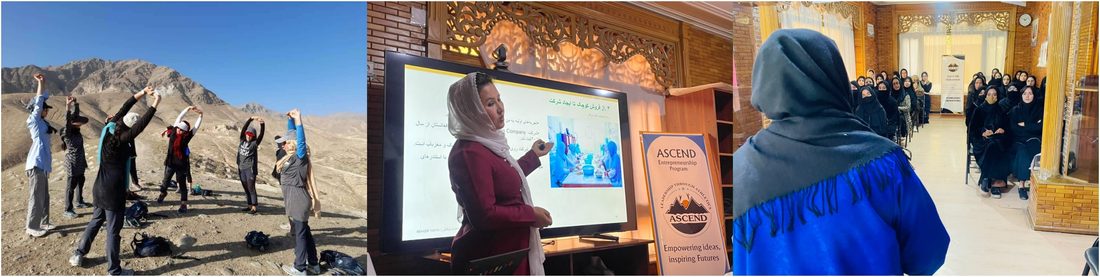
I’m grateful to say we are offering more opportunities to women and girls in Afghanistan now than we ever have before. We cannot do outdoors programming, but that was never the point; the point is the transformation and the learning. So we offer three primary programs, all face to face in our center in Kabul: Entrepreneurship for young women, SHE (Strong, Healthy, Empowered) for adolescent girls, and Advanced Leaders & Learners (alumnae health education and digital learning).
Can you tell us a little about the Ascend Alumni Association?
Yes, the AAA is an active force in Kabul delivering health education to women and girls in underserved communities. Our current number of active participants stands at over 300. The girls and women of the AAA stay engaged through structured learning opportunities as part of the Advanced Leaders & Learners program. We provide them free access to the internet and online courses through our partnership with Coursera and other digital learning opportunities. Our graduates learn through Ascend’s programs, and then design interventions in their own communities to share knowledge about physical and mental health, environmental stewardship, and life skills.
We originally set the AAA up during the evacuation in 2021. We had girls who had been in our programs from 2015-202, gone on with their lives, and were suddenly not only back in our orbit, but dependent for basic life support on Ascend. Through the AAA, we established Ascend Online, a robust program of life skills training, mental health support, language study, and professional development for the nearly 100 girls who were in transit and preparing for life in new countries. Once they landed and began to integrate into new communities, that program evolved into occasional meetups for hiking, camping, and climbing. In 2023, we reopened Ascend programs in Afghanistan and those new Kabul-based graduates expanded the AAA rapidly into what it is today.
After your recent move to the US, you’ve launched your first US-based program for women. We would love to know more about this.
I moved back to the U.S. in 2022, but the big change happened for me in 2024 when my husband retired from the Navy and we “settled” in Maine. For the first time we had the chance to put down deeper roots in the U.S. Simultaneously, the political situation here at home became more divisive than ever, and some fundamental women’s rights were challenged. It was time to bring Ascend home.
The idea of Ascend has always been a global one; gender equality is a human problem that’s not unique to any one part of the world. It was my personal ties to Afghanistan that led to me starting it and basing it there, but I always wanted to expand to other parts of the world. The tremendous benefit of climbing and community is something that I want to share widely. In the Washington DC area we have a strong base of support, including a longstanding friendship with Sportrock Climbing Centers. So, that’s where the Ascend U.S. program is launched.
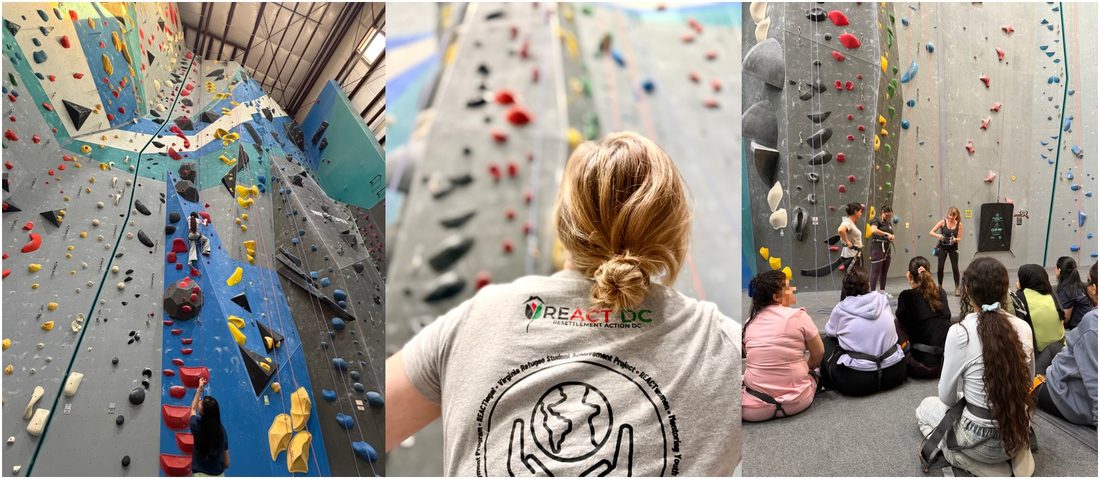
We’re offering weekly climbing sessions in a supportive community of women, thanks to Sportrock and our volunteers. Our first community is DC’s large community of Afghan women refugees. We plan to replicate this in several other metro areas over the next two years. Our own alumnae are playing key roles in the program. Next up: Raleigh, NC.
Are there core challenges facing the women enrolled in your US program that are similar to those you encountered in Afghanistan and Pakistan? Also, are there any challenges unique to your US enrolees?
It’s early days yet for our U.S. program and we will be getting to know our participants week by week. But the primary gaps they are facing are community and integration, and a chance to engage in physical activity in a safe environment. Those are precisely the same challenges faced by women in Afghanistan and Pakistan, and women everywhere.
Are there any resettled Afghan Ascend Alumni involved in your new program?
Yes, some of our alumni are volunteering to stand up the DC program, and will do the same in North Carolina.
In a 2026 podcast, you quoted: “If there’s a human being benefiting from what you’re doing, it’s worth doing.” What keeps you anchored when the uphill climb feels exceptionally steep?
I have been told I’m obnoxiously persistent. That helps with a long uphill climb.
But what I store in my memory bank, where I can visit when things get tough, are the voices of the girls who have told me how Ascend has changed their lives. When I visit Afghanistan in particular, where depression is rampant and anxiety is everywhere, girls pull me aside and say things like “I didn’t see any hope for my life, I didn’t want to live anymore, and when I came here, the lights came on for me. Ascend changed my life.”
How can we give up when this kind of transformation is possible?
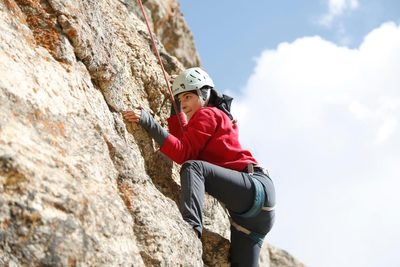
Testimonials from Ascend Participants
Enrolled in Ascend Afghanistan before the Taliban –
I started climbing with Ascend in Bamyan in 2018. At first, my parents were hesitant to let me participate, but as they saw how happy climbing made me, how much I was learning, and how much confidence I was gaining, they began to support me. Before Ascend, I had never imagined myself climbing mountains or discovering such a love for the outdoors. But Ascend gave me so much more than that. It gave me friendships, a community, and a second family. When the Taliban returned to power in 2021, everything changed. We were scared and uncertain about our futures, and we turned to Marina, who helped us evacuate Afghanistan and find safety in the United States. Although I have since graduated from the program, Ascend remains an important part of my life. The love for climbing and the outdoors that began in Bamyan has stayed with me. I’ve met wonderful people at university who share that passion, and we often go hiking and climbing together. Being outdoors continues to bring me happiness and a sense of belonging, even thousands of miles from home. Ascend didn’t just introduce me to climbing. It gave me friendships, confidence, and a community that continues to be part of who I am today.
Enrolled in Ascend Afghanistan after the Taliban –
Before I came to Ascend, I was a 12th grade student preparing for the Kankor exam, with a clear dream of going to university and studying the field I loved. When my education was disrupted, I paid the exam fee along with the other girls in my class, but we never had the chance to take the exam. It was not that I failed; I simply was never given the opportunity to try. I also saw friends I once shared dreams with suddenly facing very different circumstances. Over the following years, I kept learning on my own. I taught myself English and German, completing each level with high scores in the hope of a scholarship, but I lost the scholarship because I was not given a visa. I also studied medical subjects, but one setback followed another, and I began to lose sight of who I was and what I was capable of. Then I found Ascend, and it changed my direction. Ascend gave me a safe place to learn again, and little by little, I started to find myself. Through studying mental health, I learned to understand my emotions and recognize my own strength. Through entrepreneurship, I discovered talents I had not known I had. During my four months as an intern, I gained real work experience and saw that my efforts had value, and my confidence returned step by step. Ascend also connected me with other girls who had been through similar experiences, and knowing I was not alone gave me the courage to keep going. Because of what I gained there, I found the strength to start my university education again from the very beginning. Today, at 20, I attend university online, I have completed my PMP certification, and I am working. I still carry those hard years with me, but Ascend helped me believe in myself again and showed me that my future is still possible.
Current Enrollee in the DC program:
Rock climbing was never something I had done before or imagined myself doing. It became part of my life after I connected with girls who had been involved with Ascend in Afghanistan. Through them, I learned about climbing and had the opportunity to try it for the first time here in the United States. I fell in love with it, and it has become something I look forward to, both for the challenge and for how it makes me feel. Climbing has helped me slow down and focus on what’s right in front of me instead of worrying about everything else. When I’m on the wall, I have to pay attention to where I put my hands and feet and think about my next move. For that time, my attention stays on the climb. I can take a break from the thoughts and worries that might otherwise fill my mind.
It’s also taught me to be patient with myself. Sometimes I struggle with a climb or can’t figure out how to get past a certain spot. I’ve learned that I can pause, try a different approach, or come back and try again. I don’t have to get everything right the first time to make progress. Reaching the top after struggling feels rewarding because I know how much effort it took to get there. The confidence I’ve gained from climbing has carried over into other parts of my life. It reminds me that when something feels difficult, I can give myself time to learn instead of deciding I can’t do it. Sharing this experience with other girls has made it even more meaningful. Climbing gives us something to do together, a chance to encourage each other, and reasons to celebrate each other’s progress. I’m grateful that connecting with girls from Ascend introduced me to something I might never have tried on my own. Here in the United States, I’ve discovered an activity that helps me feel more focused, capable, and connected to the people around me.
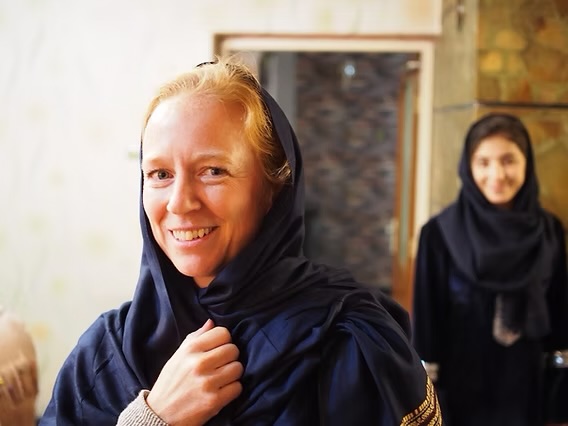
Marina LeGree
Marina LeGree is the founder and executive director of Ascend: Leadership Through Athletics, a nonprofit helping girls and young women develop confidence and leadership through sports, outdoor adventure, and community engagement. She founded Ascend in 2014 and launched its first mountaineering-based leadership program in Afghanistan in 2015.
With a background in international affairs and public policy, Marina brings more than two decades of experience in international development, including work with the International Organization for Migration, GIZ, and the U.S. Agency for International Development.
Under her leadership, Ascend launched programming in Pakistan in 2023, training local women to become certified climbing instructors and community leaders. The organization also resumed programming in Afghanistan, where its work has expanded to include mental health support, entrepreneurship, and educational opportunities. In 2026, Ascend introduced its first U.S. program in the Washington, DC area, bringing its approach to confidence, community, and leadership development to participants at Sportrock in Alexandria, Virginia.
A lifelong athlete and outdoor enthusiast, Marina holds an MPA from Harvard Kennedy School and an MA from George Washington University. She received Harvard Kennedy School’s Alumni Public Service Award in 2022.