
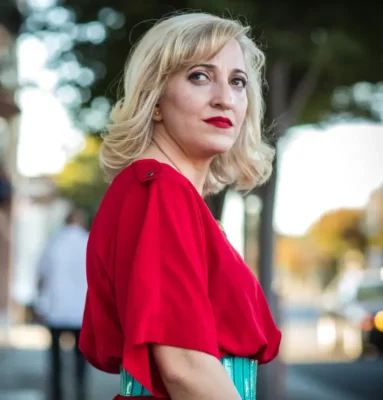
It’s not very often that award-winning investigative journalist and author, Fariba Nawa, sits in the interviewee seat. I know I’ve been given an opportunity to speak to an exceptionally courageous woman and a remarkable journalist who has dedicated her life to telling human-centric stories about people living through wars, in conflict zones, and in exile. For twenty-five years, Nawa has been at the forefront, interviewing people, covering groundbreaking news from places like Afghanistan, Egypt, Iran, Pakistan, and Turkey. Her own personal history of escaping Afghanistan as a child during the Soviet invasion in the 1980s has been a driving force for her investigative work. “Interviewing people in crisis in the field gives me a sense of purpose, a connection to traumatized communities I know too well. I was born to share real life stories-mine and theirs”, says Nawa.
Fariba, let’s begin with your powerful book, Opium Nation: Child Brides, Drug Lords, and One Woman’s Journey Through Afghanistan, first published in 2011. It still remains a top recommendation among readers worldwide. In your view, what gives your story its lasting relevance, even fourteen years later?
The book remains relevant both about the drug trade, and about how women are being treated. The Taliban is back in power. When I was writing the book, they were using opium money to fund their war inside Afghanistan. Afghanistan produced the largest amount of opium in the world, which was turned into heroin and then trafficked out to Europe. Cultivation has basically been curbed, but that’s not where the money is made. So right now, the Taliban are definitely making money from trafficking the oversupply of opium they’ve had before they started banning its production.
It’s relevant because the women’s situation hasn’t changed. Opium Nation explores how women were both victims and perpetrators in this drug war. It exposes how women are sold into, basically, slavery to older men when their fathers are indebted to drug dealers. They’re sold to those drug dealers as sort of a payment. They’re bartered, and while I don’t have any new information about opium brides, I’m sure that’s happening quite a bit now as well, because it’s normalised. There’s no law against it.
A part of the book is a memoir, and it talks about identity, return to a homeland, and nostalgia. Those are evergreen topics for those of us who live outside our homeland or birthplaces. It’s something that we can always relate to.
Much of your investigative reporting now takes place through On Spec Podcast, the news and storytelling podcast you co-founded. Could you describe your process and how you decide which stories to pursue? What are the main challenges and risks you have encountered?
So often the stories come to our team or to me, or we come up with a theme together. It’s a very collaborative, freelance-run, reporter-strong podcast. We have a fact-checker, a lawyer, and a full team of around ten people, all working on a freelance basis. The podcast came to be in reaction to legacy media telling us we always had to have a Western angle to our stories, specifically an American one. Their labour conditions were unacceptable to us, and we decided to create our own outlet.
For seasons five and six, the stories came to me, and I led the investigation. In previous seasons, I was either hosting, editing, or marketing, wearing multiple hats at once. The investigative process is a long one that takes up to one to two years to produce an entire season. We go deep, going through each document with a fine toothcomb. Season five was our first time doing a series, and I think it was our best work so far, because it was in collaboration with The World and The Verge, which are very well-known outlets in the West for their work in radio and print.
Currently, we’re following the stories of sexual abuse survivors. There are security risks when you write about people in power and question their actions. We are based in Turkey. Journalists are quite easily jailed here and the risks are many. All over the world right now, authoritarianism is on the rise, so journalists are seen as the enemy, and you will face security challenges and financial burdens. It took us two months of asking on a daily basis to raise $30,000 for the $40k that we need for our current season. We’re a small shop, and it would be nice to get more support.
Your latest investigation traces the harrowing experiences of migrant women facing abuse and harassment by men who should be helping and keeping them safe. Is there anything you can reveal about what you’ve uncovered so far?
I can’t share much at all right now. We’re working on a story about sexual abuse of women at the hands of men in power. I will say, the kinds of stories we’re hearing are infuriating and enraging. Sexual violence is so normalised. It’s the patriarchy plus unchecked power, and that’s what I’m going after this season.
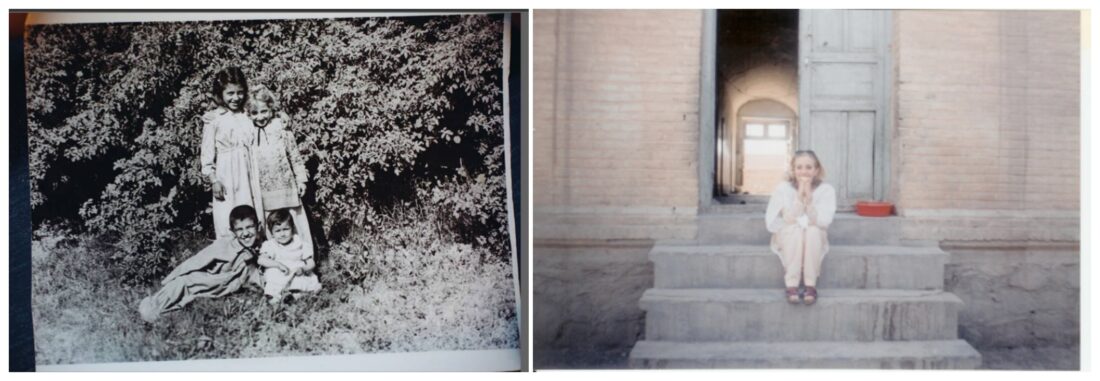
R – Fariba’s first return home to Herat, sitting on the steps of her grandfather’s orchard home in 2000 during the first Taliban era.
You’ve spoken about moving away from parachute journalism and challenging the white gaze. Why is making this distinction so vital to the stories you tell?
Parachute journalism gets things wrong all the time. You have white men who seem to be telling everyone’s stories, and many times, they don’t even speak the language of the country they’re reporting from. I have no problem with foreigners coming into a place and covering news. But I think what’s important is that those foreigners stay there for some time, or that they treat the local journalists they hire as partners rather than subordinates. For example, I always rely on my local partners and make sure I work with someone who knows more than I do about the culture and history, when covering a story from another country.
Also, the Western colonialist gaze on the rest of the world has given us all this tunnel vision about the world and limited our understanding of it. What I would like to see are more perspectives from the Global South everywhere. I’d like a Nigerian writing about Russia, for example, or a South African writing about Afghanistan, or a Brazilian going to Iran and writing about Iran. Those are the perspectives and narratives that intrigue me because it mixes things up. I was always expected to cover Afghanistan since I’m Afghan. One of the reasons I stopped covering Afghanistan was so I could get out of this pigeonhole, and be seen as a professional journalist with a Middle Eastern studies degree, who has travelled half the world and has a knowledge base beyond Afghanistan. Legacy media, and the way that it operates, pigeonholes women from our parts of the world into telling very minuscule and very tunnel-vision types of stories. They only want this limited narrative of a society, and I got tired of that.
If people take away just one lesson from your investigative work, what do you hope it is?
The lesson I want people to take from my work is that it is never hopeless. And I want you to understand that your caring about these women, and your financial support for our investigations can help. These aren’t just stories, these are people’s lives. After this story comes out, if there’s enough attention on it from a coalition of outlets, including big ones, hopefully, there will be some change, and some justice. And what can that look like? That looks like some of these men going to jail, and international monitors being sent to make sure that these deportation centres are being checked. It won’t stop sexual abuse altogether, but I think it will deter some of it, and that’s our goal.
In an earlier interview, you encouraged readers to stay engaged and interested in Afghanistan, to care, even when it is not in the news. Unfortunately, this is still relevant today. Despite the Taliban’s return and the ongoing gender apartheid, Afghanistan and especially Afghan women continue to be overlooked. Could you share your perspective on this issue?
I think it’s much harder now to get people’s attention, because they are so overpowered and overstimulated with information from everywhere. I understand the world’s fatigue. We are being bombarded every day with disasters from all over the world: genocide in Gaza, massacre in Iran, a horrifying civil war in Sudan, and then what’s happening in America. And Afghanistan has become the story of a constant victimhood.
We can’t do this by ourselves. Yes, our men are killing and beating us, not the majority of them, but those in the government are normalising gender apartheid and misogyny in the most horrific ways. That is not being done anywhere else in the world in the systematic way that the Taliban are doing it. This thing about not recognising them, but staying engaged with them and educating them, it’s like beating a dead horse. These people are not going to change until they die. Their ideology makes them who they are, it won’t change. If they let women breathe and go to school and work, then they wouldn’t be the Taliban. Women to the Taliban are just there to procreate. It makes me sad that there’s no continued effort to get rid of them because that’s what it’s going to take. So, in short, because of the lack of attention it feels like Afghanistan is being abandoned again.
I often wonder how much the diaspora can do. And right now, the diaspora is the one playing a major role in forming international policy. We have a huge diaspora, up to six million Afghans, and some of them are doing very well. Unfortunately, many of them support the Taliban. If we unite in the diaspora against them and don’t send them money or help them with projects, then I think our power is almost greater than any kind of international outrage from the masses.
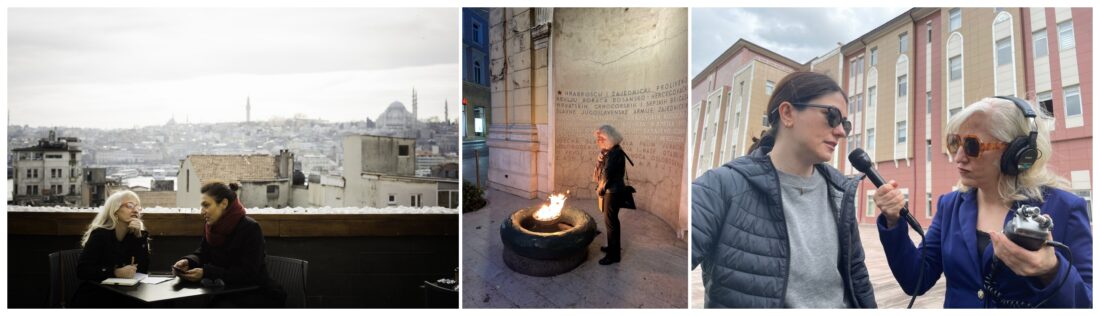
C – Fariba Nawa taking a moment to reflect in Sarajevo near the Eternal Flame memorial that always burns to commemorate the victims of World War Two. October 2025.
R – Turkish journalist Beril Eski speaks with Fariba in front of a courthouse in Balikesir, Turkey working on Lethal Dissent in 2023.
Can you share more about your humanitarian work for Afghans, now that you’re not reporting on Afghanistan?
Most of my work for Afghans now is behind the scenes. Last year I taught an online storytelling class for Afghan girls living in Afghanistan and some who were refugees in other countries. I was so inspired by them and their stories. I’d like to continue doing this if time allows, because it’s volunteer work. I also help many Afghan migrants who come to Turkey, where I live. Turkey is a sort of purgatory of the asylum system, and it’s a really hard one. I help them with resources and connect them to the right people. There was a young woman who was raped by the smuggler who had brought her into the country. I wrote her story and, through it, connected her with someone in the US who helped her move there. Eventually, her asylum case was accepted. We were able to get justice for her and put her rapist behind bars through our story.
Given the intensity of your work, how do you unwind and recharge when you take a break?
I love my work; it is my joy. In fact, I get super bored on a holiday. I used to be able to read novels, but now it’s mostly non-fiction. I’m constantly reading the news, and I do doom-scrolling before I sleep, often watching comedy or late-night shows, which are political comedy. I really enjoy that. I am a news junkie for sure. It’s not something I run from.
Also, over the years, I have developed emotional boundaries to know when something is really tough. I was just on the Iran border covering that breaking story about how thousands of Iranians were massacred by their own regime. I met a protestor, and I just broke down. Not while I was interviewing him, but after the interview. I just broke down in my own room in private with a friend on the phone. So, I think it’s really important to do that, and I do that a lot. I just cry. Women do. I think a lot of us women journalists aren’t ashamed to do that. We hold it together on air when we’re doing the job, but afterwards it’s important to debrief with friends. My best time, though, is with my kids. I have two teenage daughters, who I’m very close to. We watch films, we talk a lot, and we like going to museums.
Beyond your public work, what would you like people to know about you as a woman and a mother?
I am legally blind, and this is really important, and I haven’t spoken about it publicly, but I need to now because it’s gotten worse over the years with ageing. If I see you across the street, I will not recognise you. Glasses don’t help me with distance, this is from birth. I do have about a dozen glasses at home in different colours for reading and close-up work which I didn’t need when I was younger, but I do now.
I have a condition called albinism. There are degrees of albinism, and I don’t have sort of the full-on, pasty white skin with white hair and very clear blue eyes. That’s not me. I’m from Afghanistan, so I’m technically brown, but I have white skin. I look like a bleached blonde, but it’s actually my own hair. I’ve had to ward off a lot of negative comments about being westernised and dying my hair as an Afghan.
As far as motherhood goes, I learned a long time ago that there is no balance between work and motherhood. It is messy, and I embrace that. There’s no perfection in being a mother. There are things I’ve done that I regret but I think my kids are pretty happy with me. But ask them. I’ve taught them to be critical thinkers and to stand up to power, to speak truth to power, and they do. That includes with me as well, when they think that they’re not getting what they deserve. Istanbul has made me into a cat lady and we have a cat at home. She’s the peacekeeper in the house between the hormonal teenagers and their menopausal mother.
For those of us without political power, what meaningful steps can we take to support Afghan women and girls living under the current regime?
You can teach. There are many online schools now for Afghan girls. You can support girls by providing them with phones, tablets, and laptops. You can buy them ESIM cards for internet connectivity. Right now, people are hungry and starving. The Taliban are cutting off people’s hands and legs because they’re stealing, and they’re stealing because they’re hungry. It’s not just about women, it’s also about entire families. The need for food is so urgent.
Then speaking out about it, not ignoring it, and not undermining it. And speaking out, not with dogma, but with facts, debunking influencers who are going there and being paid, probably by the Taliban, to make it look like it’s rosy. People should boycott the Taliban; this whole idea about engaging with them is unfair because Afghan women have been banned from doing anything.
From the outside, we can provide financial assistance and educational assistance. You can also hire people from Afghanistan. For my website, I hired a web designer living in the country. In the 20 years the US was there, people were trained in many different fields, and now they’re stuck there with no jobs. So if there is a job that can be done remotely, I encourage people to hire someone in Afghanistan to do it.
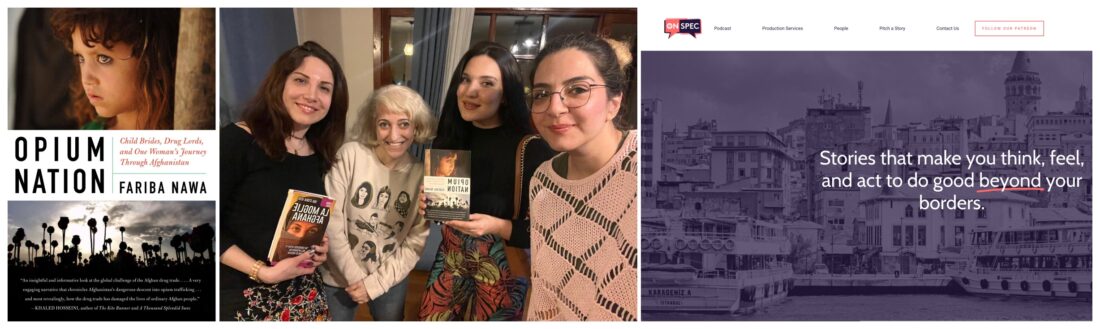
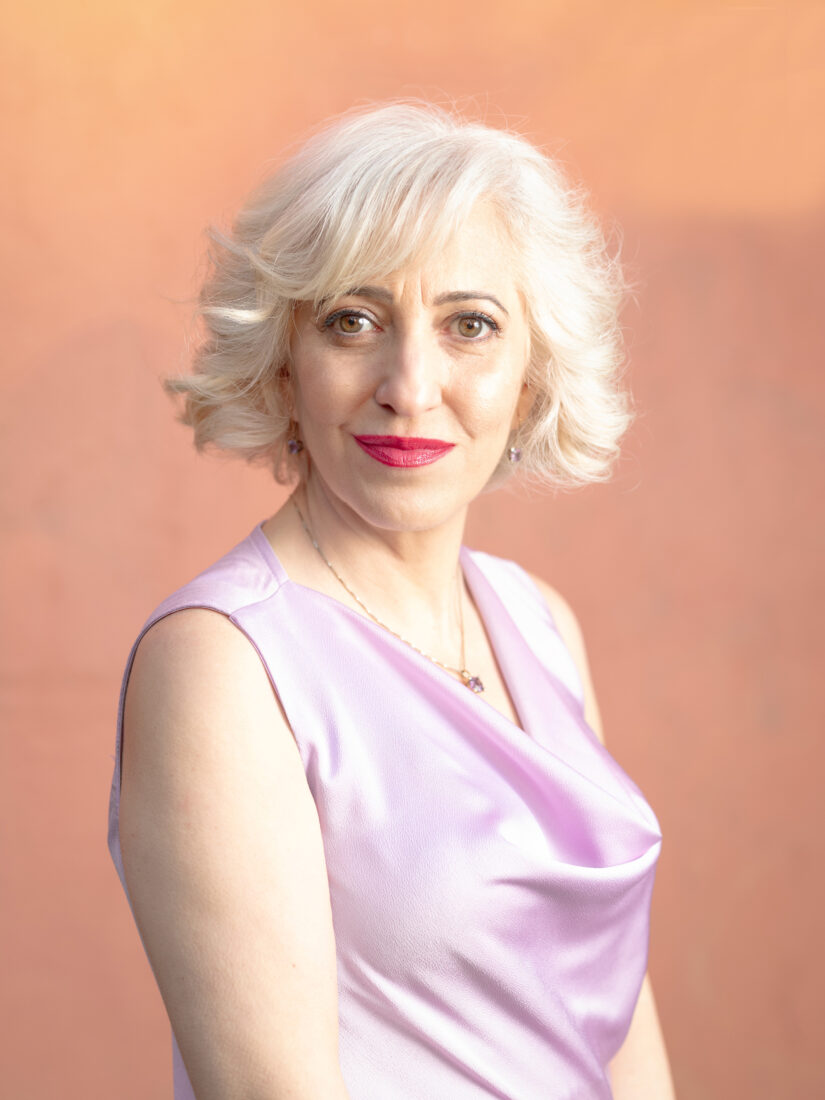
Fariba Nawa
Fariba Nawa is an investigative journalist, podcaster, author, and speaker based in Istanbul, Turkey. She’s also the chief editor of On Spec Podcast, an audio documentary from the field. Fariba wears a lot of hats in journalism, but her favorite part is getting out there and talking to people, searching for clues, and making bad guys accountable for their crimes.
Born in Afghanistan, she came to the U.S. as a refugee and spent her teen years in California, then headed to the American East Coast for her undergrad and graduate education. She obtained a master’s in journalism and Middle Eastern studies from New York University.
In the last 30 years, you could’ve found her covering the news from places like Afghanistan, Egypt, Iran, Pakistan, and Turkey in the last decade. She’s the author of the reportage memoir Opium Nation: Child Brides, Drug Lords, and One Woman’s Journey through Afghanistan and co-author of several nonfiction anthologies. She has also written fiction in the short story collection The American Way: Stories of Invasion. Fariba has won awards for her work, like the Overseas Press Club, but she’s most proud of the positive impact her stories have had on people’s lives.
She’s fluent in Farsi/Dari (it’s the same language but different dialects) and can get by in Arabic and Turkish. Some of her recent work can be found in The World, The Verge, Time, The Christian Science Monitor, The New Yorker, and The Financial Times.
But her hardest job is being the mother of two opinionated teenage girls who aren’t afraid to speak truth to power — and that includes her!
What an incredible lady, with such courage and determination! Thank you for bringing Nawa’s work and her efforts to the consciousness of the wider world.
Independent journalism requires hard work, persistence and d a whole different mindset than those of us who work in the corporate media. I can relate with Fariba’s frustration with the mainstream media and I’m glad that she’s pursuing her own vision. I just hope that more journalists can and will choose to tread this path.
A truly inspiring interview that is so relevant in our current world, and so interesting to learn more about the person behind this incredible work!
Amazing that you share this lady’s brave journey and work! There is not a better person I can think of who could do justice to her interview!
“[I]t is never hopeless”. That’s the belief that drives such discipline, talent, and courage. What at times seems to be limitless courage. But, there’s a person behind it all, dealing with the vulnerabilities of life that we all face. That was really touching and somehow made her work and contributions even more special. Thank you for this interview, Shikha and Fariba jaan.