Supporting the Josh for rural football players
Upon meeting Arup Das, it was apparent that football was more than a passion — perhaps even an obsession. The football bug had bitten him during his school days at The Lawrence School, Sanawar, and after graduation, he played for his University in Delhi. Later, it was not so much to play the game himself, but to develop and make the sport accessible equally for girls and boys.
The story begins after he quit his advertising career. In November 2000, Arup co-founded the India Youth Soccer Association (IYSA) with Bill Adams, a British coach based in Delhi. “We found common interest in wanting to develop football, particularly for socially disadvantaged communities. IYSA, a non-profit initiative, became one of the first such youth football projects in India. Only Tata Football Academy, targeting elite talent, existed then.”
Initially, between 2001 and 2007, IYSA’s aim was simple — to increase the number of children playing football, beginning from the ages of six or seven. To generate interest and awareness, they organised Mini Leagues for hundreds of NGO and school students in Delhi, including The Shri Ram School, Salaam Baalak Trust, Deepalaya and Butterflies.
Arup speaks of early struggles, “IYSA could only hire stadium fields for short terms. The Shri Ram School hosted us for a while. Corporate sponsorships, in small amounts, were given by Ambuja Cement, Bajaj, Triveni Engineering and Godrej. In 2007, Delhi’s stadiums closed for renovation for the Commonwealth Games, and the Mini Leagues stopped.”
Continues the Managing Trustee, “In 2010, the grassroots Josh Academy was set up on government-leased land. Over 1000 boys from Delhi Government schools living nearby low-income colonies were trained free of cost for over 10 years till 2020, when the Government decided to construct a school building on the field.”
“The name ‘Josh’ was conceptualised because I wanted the Academy to have an Indian name symbolising zeal, enthusiasm and fighting spirit. The New Delhi Josh Football Academy became Josh Academy. Josh is our brand name, and IYSA is our legal name,” Arup states.
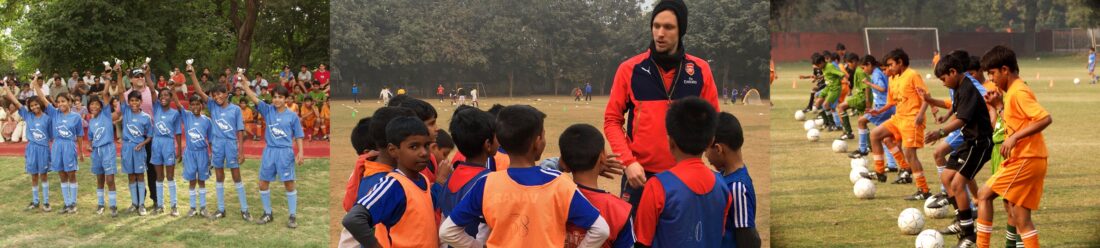
The management continued to instil Josh in the Government school boys because many of the matches were against Private school boys, who understandably were much healthier with more resources. Today, half a dozen of the Delhi Club’s top players are from the New Delhi Josh Academy.
One of the early milestones was an international partnership between IYSA and the London-based Arsenal Community, whose coaches would travel to India to train the boys for four months every year. The Academy played in the AIFF Youth League, reaching the top 16 in India in 2016. This resulted in many of the boys playing for some of Delhi’s top clubs, university, and state teams.
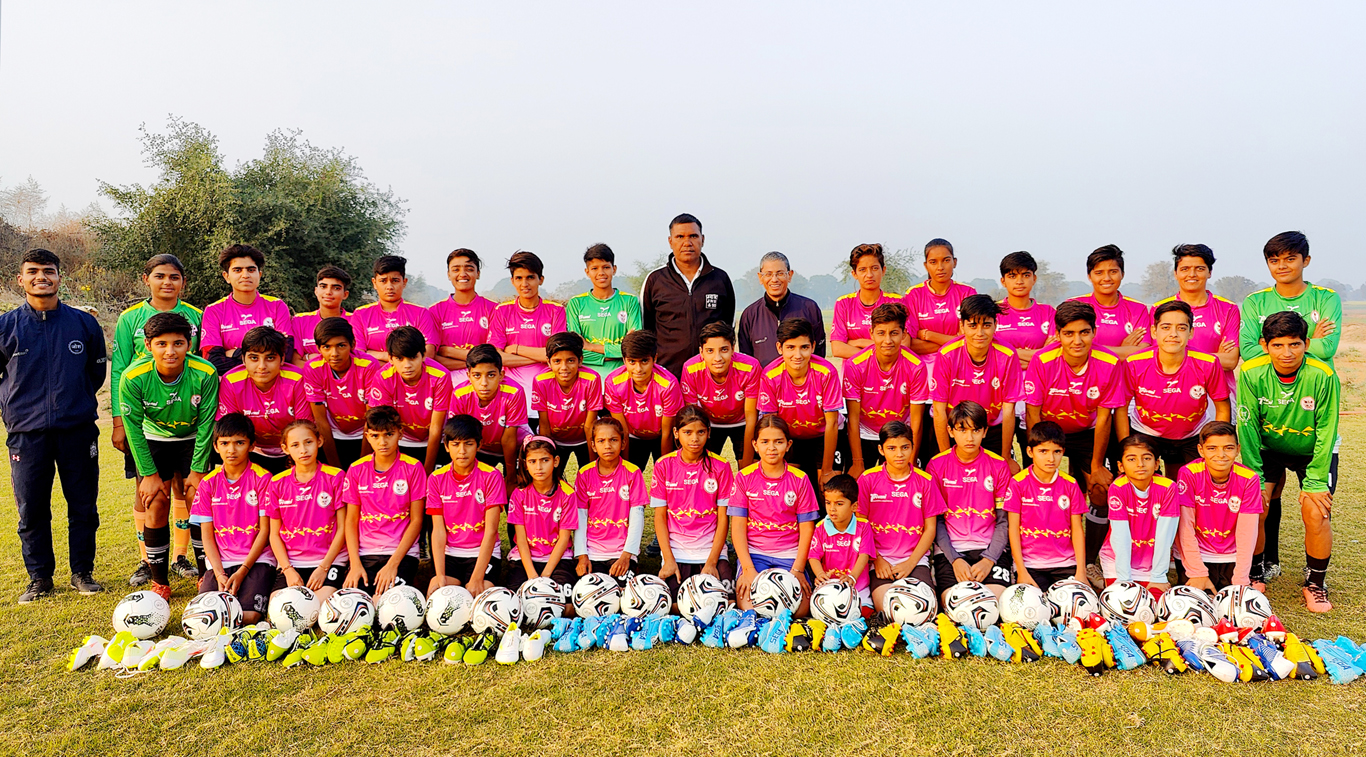
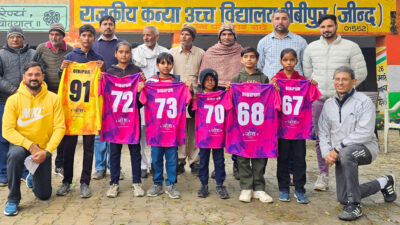
Going rural was a post-COVID decision. IYSA took the Josh project to villages across North India. From 2020 to 2026, approximately 70 village Academies involving over 7300 girls and boys aged between 8 and 20 years were provided with playing kits, training equipment, over 4000 footballs and Mini Goalposts at numerous village panchayat fields.
IYSA was among the early pioneers in India to introduce football as a medium for social change. It went beyond scouting for talent to focus on large-scale youth development and improving leadership and life skills through sport. Equally important, it provided youngsters with purpose and goals, helping steer them away from antisocial activities. This was long before the recent surge in commercially run grassroots football Academies in cities began in 2010.
Arup affirms, “Children in villages have potential talents and desires but lack the resources. They practise mostly on dusty fields and have two or three footballs amongst 40 to 50 children. Many local coaches volunteer their time, which is a remarkable commitment, but they need support and guidance.”
An increasing number of rural girls playing football have been beneficiaries. Since this sport, particularly among girls in the sections of society IYSA focuses on, is still relatively rare, highlighting here one of the organisation’s success stories.
The prime support was to a girls’ team from Chuli Bagriyan and Sadulpur in Hisar, Haryana. Arup met coach Vinod in 2021, who had established the girls’ team, and found him and the girls very committed. They practised morning and evening on a dusty field hired from a farmer. Later, the village panchayat gave them a space where the girls planted grass and built the field themselves without any local help. IYSA gave goalposts, kits, boots, footballs and funded the first Girls tournament.

Arup, himself a certified coach, decided to teach these girls periodically, at times commuting four hours from Gurgaon to Chuli Bagriyan. “During training sessions, I liked the way they could keep possession of the ball under pressure and had confidence in the ball. I prefer my teams to play with this philosophy, having seen too many teams kick the ball long without any aim or thought. Having initially been coached by a government coach in Hisar, they had a decent foundation. I mostly fine-tuned them with positioning awareness, building from the back, transitions, keeping their defensive shape and breaking down defences, etc.”
Vinod got the team to represent a Delhi Club in the Delhi Women’s League, and Arup’s coaching helped them to finish as Runners-up in consecutive seasons. “Almost every alternate day, they would wake up at 3 am and reach Delhi’s Nehru Stadium by 10 am, play a match from 12 noon till 2 pm and then drive back. They were so tired after six weeks that they lost the final mainly due to exhaustion. They then went on to become the All India Inter University Women’s Champions twice, representing Hisar University.
Initially, the girls faced obstacles. They were rejected during the Haryana Junior State Trials. Vinod got them to play for Himachal, and they reached the National Championship Finals. Some of these girls were called to the India Camp and then selected to play for the India Junior teams.
Taking more responsibility, the club in Delhi took them to play in the professional Indian Women’s League (IWL). IYSA continues to support the younger girls in the Academy who are now playing well.
Arup highlights, “IYSA completed its 25th year in November 2025. The road has been rough and will continue to be, but the experience gained, knowledge, and coaching philosophy being transferred to rural coaches are valuable for the future.”
He assesses, “the transition from city projects to rural areas over the last few years has been surprisingly smooth because we kept it very simple: supporting and improving what village coaches were already running. Logistics are the major challenge. We need to step up to a larger program for long-term development — specifically upgrading coaching, nutrition, competitions, equipment, education, fields and facilities and eventually have our own land for an Academy. For this, a lot more resources, similar-minded people and funding will be needed. A whole new challenge!”
Going by the enthusiasm and achievements of these young players, IYSA’s Josh is already apparent — and will continue to flourish from one football match to the next.

Contacts:
Arup Das | Trustee | +91 9810521312
Email: arupdas@indiayouthsoccer.com, iysa.arupdas@gmail.com
Website: www.indiayouthsoccer.com | www.facebook.com/indiayouthsoccer
Instagram: iysa.joshacademy | linkedin.com/in/arup-das-70698019
Donations to IYSA in India are tax-exempt under Section 80G of the India Income Tax Act 1961
Amita Sarwal
After practising homoeopathy for 10 years, Amita Sarwal changed her career path. Since 1973 she has been writing on lifestyle, personalities, architecture, interiors and travel. In Singapore, she was an Editor with Editions Didier Millet for pictorial encyclopedias, books and magazines. Her personal milestone continues to be The Spirit of SKV – Chronicle of a Girls’ School, to mark the Golden Jubilee (2006) of her alma mater, Scindia Kanya Vidyalaya, Gwalior. To showcase the exemplary work being done by Changemakers / Unsung Heroes, Amita now focuses on writing about how they are elevating the lives of the socially disadvantaged.
Great article on a very deserving organisation! Nothing is better than sports or music to bring people together. We need many more Arup Das with a purpose and passion in their hearts.
Excellent initiative, little known about it.
Keep the good work going. It’s always a battle here in our Country. See the condition of the Top League. In shambles.