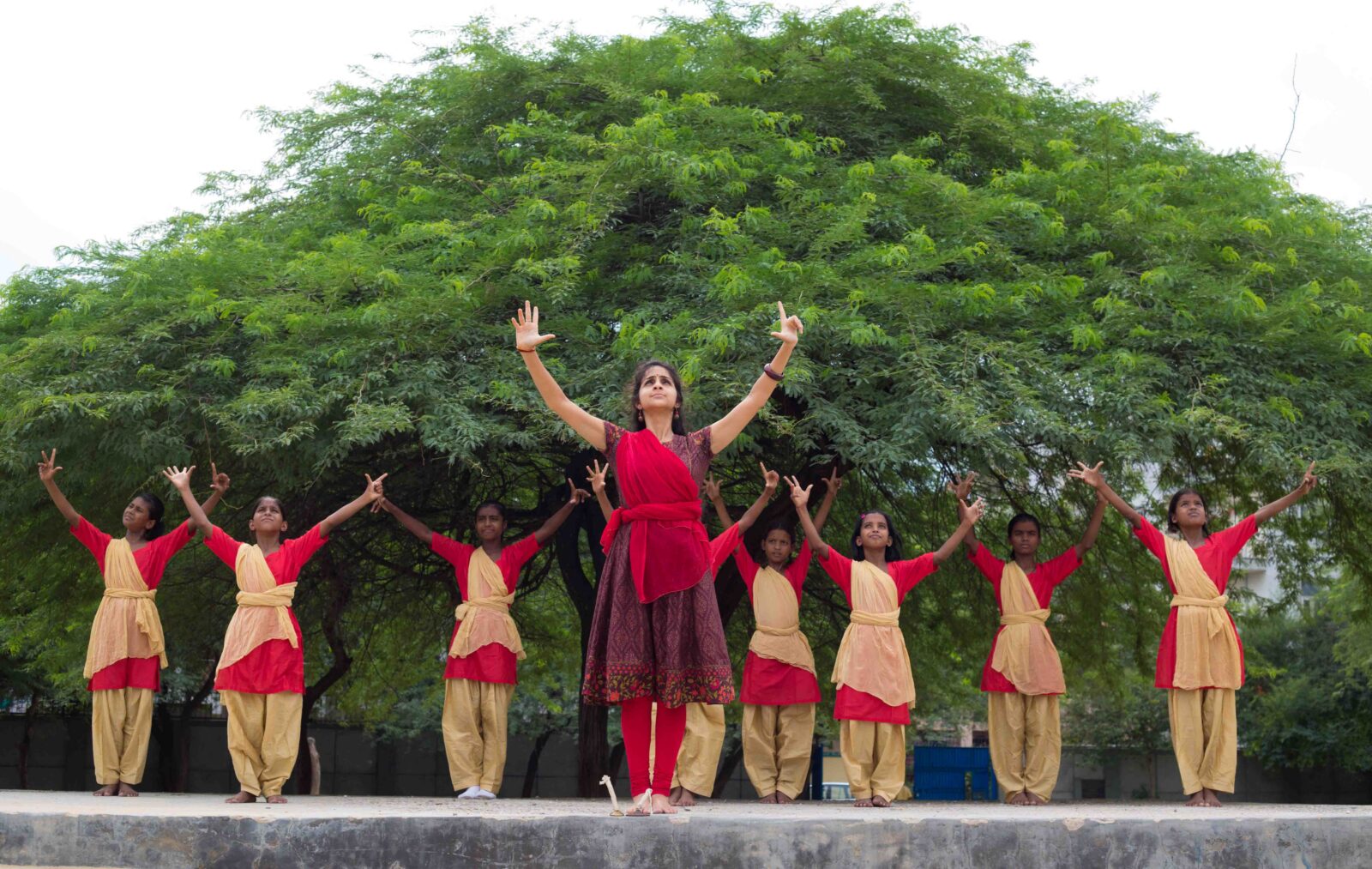
When Canadian Prime Minister Mark Carney arrived at New Delhi’s Leela Palace during his recent visit to India, he was welcomed by young Bharatanatyam dancers from the Sarvam Foundation. Weeks earlier, the same group had performed for football legend Lionel Messi. Behind these poised performers lies an inspiring story of transformation.
The common thread linking many of Sarvam’s dancers is that they come from socially disadvantaged backgrounds. Curious to learn more, I spoke with Sarvam Foundation founder Nehha Bhatnagar, whose journey is as remarkable as the organisation she leads.
“God is the Doer, and I am merely the Medium. Nothing in my life would have been possible otherwise,” says 39-year-old Nehha.
Raised in a middle-class Delhi family, Nehha is the daughter of retired Merchant Navy Captain Devendra Bhatnagar and Hemangi Bhatnagar, who today serves as CEO of Sarvam Shakti. Along with her brother Jay, Nehha attended The Shri Ram School and later Delhi Public School. Sports, extracurricular activities and classical dance played a major role in shaping her childhood.
A CBSE Arts topper, Nehha completed her Bharatanatyam Arangetram while still in school. After a brief stint studying Sociology at Lady Shri Ram College, she transferred to Knox College, Illinois, where she earned a degree in International Relations.
Returning to India, she planned to pursue higher studies at Jawaharlal Nehru University (JNU). Instead, a chance meeting with renowned Bharatanatyam exponent Padma Bhushan Dr Saroja Vaidyanathan changed her path. Joining Ganesa Natyalaya, she toured extensively with her Guru’s troupe while also interning with Dr Shashi Tharoor, then Minister of State for External Affairs. Her responsibilities included research and writing, skills that would later prove invaluable.
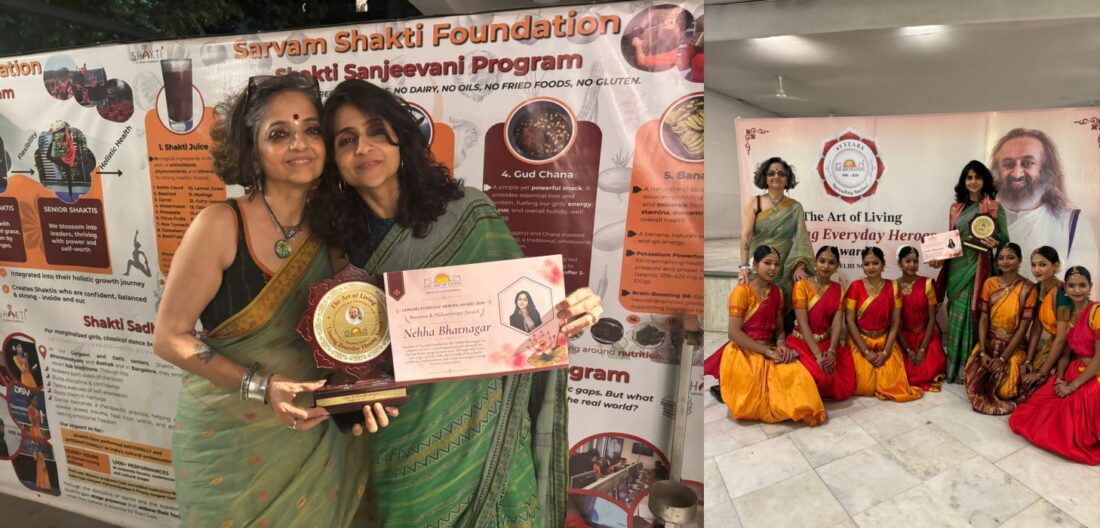
The seed for Sarvam was planted after a TEDx Pune talk in 2010 where she spoke of observing a male dancer who came from a humble background, and how classical dance had shaped his personality. Inspired by the feedback from this talk, she began creating platforms that showcased lesser-known Indian art forms and connected artists with wider audiences, reveals Nehha.
By 2012, the idea of Sarvam had taken shape. Alongside dance residencies and cultural programmes, Nehha started free Bharatanatyam classes for 20 underprivileged girls. In 2014, Sarvam Foundation was formally registered as a non-profit organisation.
The impact grew steadily. Through TEDx events and cultural showcases in India and the United States, more than 100 artists received valuable exposure. Sarvam’s first group of girls travelled to Poland and Slovakia, participating in international cultural exchanges.
A new chapter began in 2018 when Nehha married Omprakash Rudraiah, better known as Ompi, and at home also known as Sharath, and moved to Brisbane, Australia. While continuing to dance professionally and pursue studies in coaching and wellbeing, she remained deeply involved with Sarvam’s growth in India.
In 2019, Nehha and her mother, Hemangi, decided to significantly expand the initiative. What had started with 20 girls soon grew to more than 100 participants from underserved communities in Gurugram (previously Gurgaon).
A holistic curriculum combining classical dance, yoga, nutrition, spoken English and digital literacy was introduced. Today, the program reaches hundreds of girls across multiple centres.
Nehha vividly recalls her early experiences working with children in informal settlements. “When I first asked a group of girls to dance, they performed Bollywood item numbers. I realised that what they truly needed was identity, recognition and dignity.”
Support arrived from many quarters, including international partners such as Poland’s Brave Kids Festival. “When intentions are pure, the universe joins you,” the Founder says, and is quick to acknowledge the people who made the journey possible. “My mother is the pillar of Sarvam Shakti. My father, brother and my husband have stood firmly behind us. We also have a wonderful team of staff, interns and volunteers.”
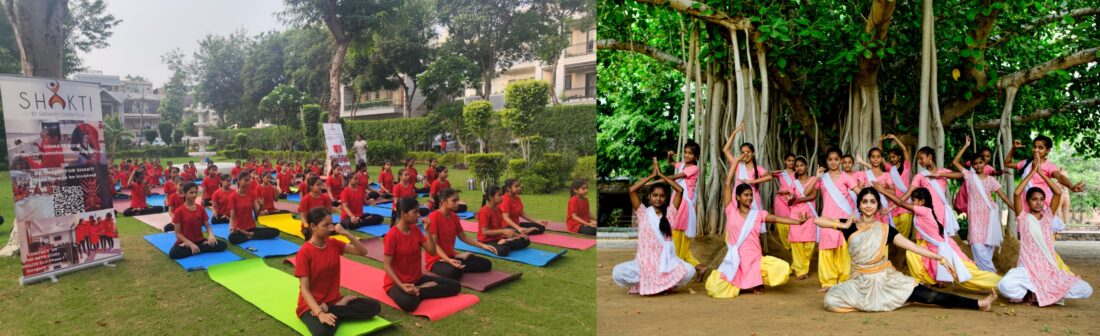
In the early years, many questioned the value of teaching classical dance to children from disadvantaged backgrounds. Today, those doubts have vanished. One of Nehha’s most cherished memories is seeing fathers proudly escort their daughters to class and support their travel and performances.
The organisation’s turning point came when her parents moved to Gurugram and dedicated part of their home as a permanent centre for Sarvam activities. The space now accommodates around 200 girls.
Sums up Anusha Verma, Project Manager, “Sarvam Foundation is a non-profit organisation operating across three states in India: Delhi, Gurugram, and Bangalore. The mission is the holistic education of the 395+ marginalised girls they serve in their after-school program. Through a rigorous and emotionally intelligent curriculum of Classical Dances, Yoga, Spoken English, Computer Education and Supplementary Nutrition, the Shaktis are growing into confident and bright young women. From eight years of age to 21 years, the Shaktis undergo a comprehensive learning of the mental, physical, social, spiritual and emotional domains of health and wellbeing. This is a unique grassroots initiative for girl child empowerment that has been thriving for over 10+ years.”
Success, Nehha believes, is measured not merely by achievements but by transformation. Several girls who joined as children now serve as mentors, teachers and paid interns. Some have travelled internationally, gaining confidence and can make balanced decisions affecting their lives.
This has been made possible as, beyond dance, Sarvam promotes physical, emotional and social wellbeing. Participants learn nutrition, hygiene, communication, leadership, problem-solving and life skills in a nurturing environment.
Nehha describes how the unique Intuition Program by the Art of Living Foundation, for children and teens, conceptualised by Sri Sri Ravi Shankarji, has helped them. “It enables young minds to learn to tap into their sixth sense with ease for creativity, decision-making, analysis, and smoothing other life experiences. Using a sound body-mind calming toolkit, the children’s minds and nervous systems are brought to a calm state. They are then guided to use blindfolds and engage in varied activities to trust their intuitive hits.”
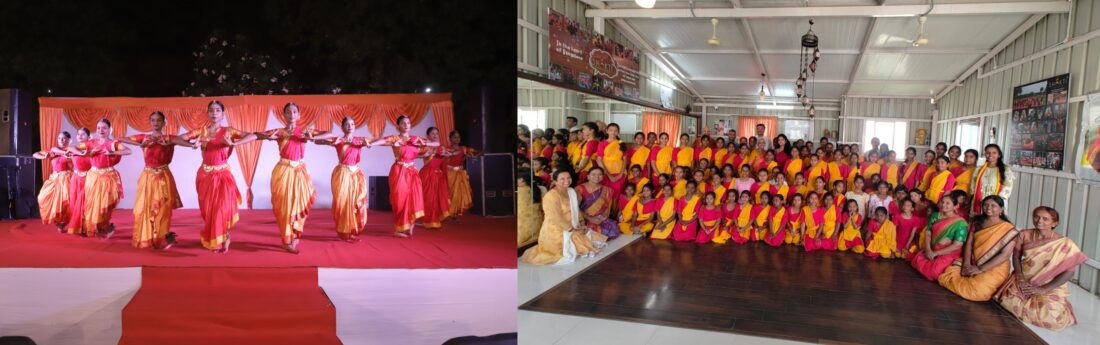
Looking ahead, Sarvam plans to expand its Super Shakti programme supporting mothers through nutrition, crochet and yoga; strengthen its Bengaluru centre and computer lab; create new opportunities for existing students; and open a new centre in Delhi that will serve another hundred girls.
What Sarvam Shakti demonstrates is how, from a small dance class of 20 children, it has grown to an internationally recognised movement, further affirming how art, when combined with purpose and compassion, can transform lives and communities.
Appropriately, in conclusion, the CEO, Hemangi Bhatnagar, affirms, “For us, each Shakti is important. That’s why we endeavour to ensure that we train each one individually to get them to enrol in colleges and also get them placed in a meaningful career according to their aptitude and interest. We are proud that every one of the senior batch Shaktis is now placed, earning a stipend — and more importantly, has a bright future ahead of them.”
Contact: Nehha Bhatnagar +91-98717 00316
India:
Account Name: Sarvam Foundation
Account Number: 6411382360
Bank: Kotak Mahindra Bank, Vasant Kunj
IFSC Code: KKBK0000216
www.sarvamfoundation.org
http://www.sarvamshakti.org/
Amita Sarwal
After practising homoeopathy for 10 years, Amita Sarwal changed her career path. Since 1973 she has been writing on lifestyle, personalities, architecture, interiors and travel. In Singapore, she was an Editor with Editions Didier Millet for pictorial encyclopedias, books and magazines. Her personal milestone continues to be The Spirit of SKV – Chronicle of a Girls’ School, to mark the Golden Jubilee (2006) of her alma mater, Scindia Kanya Vidyalaya, Gwalior. To showcase the exemplary work being done by Changemakers / Unsung Heroes, Amita now focuses on writing about how they are elevating the lives of the socially disadvantaged.
Wonderfully written. You have traversed Sarvam Foundation’s exciting journey with a thoroughness that only comes with experience and journalistic ability. And ofcourse love for what ypu do.
Thank you very much.
Wonderfully written. You have traversed Sarvam Foundation’s exciting journey with a thoroughness that only comes with experience and journalistic ability. And ofcourse love for what ypu do.
As associated with Sarvam, I can but state that the effort to empower the marginalised girl child is so rewarding for it enables them in turn to shape their community.
Thank you very much.
Woww!! Reading this made me so proud. We all are here because of that one decision. So grateful to have a Guru like her and Sarvam