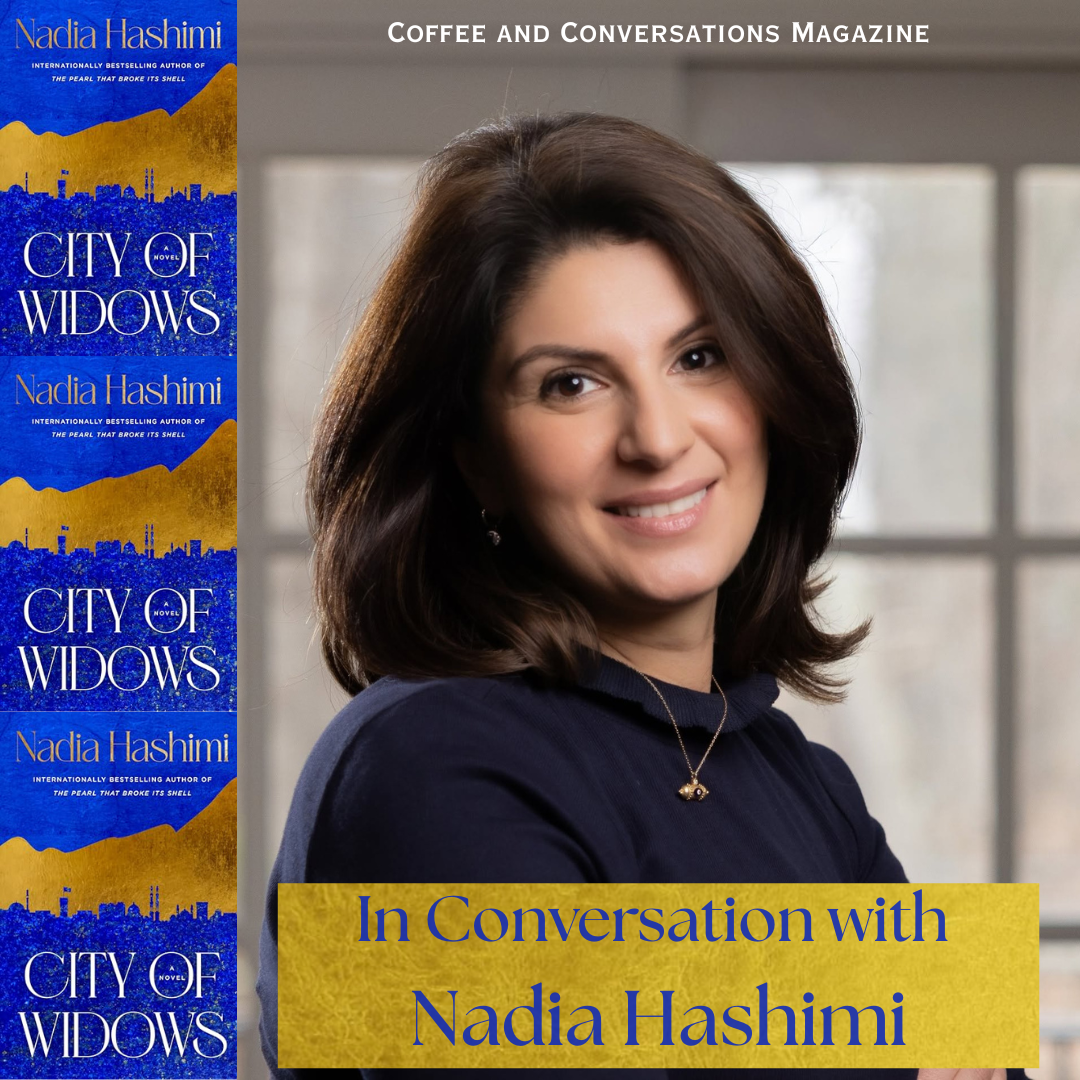
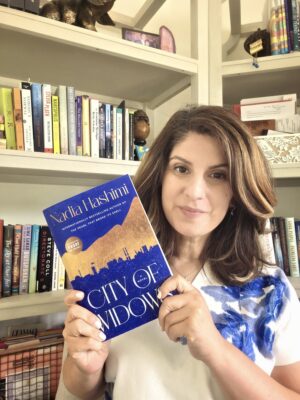
Whenever you step into the world of a Nadia Hashimi novel, you can count on being swept away by a riveting, heart-wrenching, emotional story that leaves its impact on you long after the final page.
City of Widows, internationally best-selling author Nadia Hashimi’s latest novel, is a tale of reinvention and resistance told through a powerful female lens. This deeply human story feels so real and immediate that it leaves you breathless at times. The story unfolds with Marjan, a female soldier in the Afghan military Female Tactical Platoon (FTP), and her daughter Hawa, on the run from the Taliban. Together with fellow platoon member Soraya, a TV journalist, Mina, and other vivid supporting characters, the novel offers an eye-opening account of Afghan women’s survival during the Taliban’s takeover of Afghanistan in 2021.
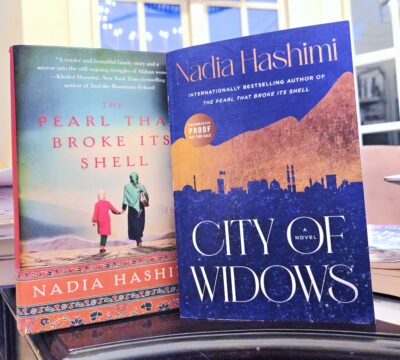
This novel is also the long-awaited sequel to Hashimi’s internationally acclaimed debut, The Pearl that Broke its Shell. For readers like me, who still carry Rahima’s story in their hearts, City of Widows offers a deeply satisfying sense of closure through a well-developed and multidimensional character arc. Like its predecessor, City of Widows unfolds in a dual timeline, alternating between the period just before the Taliban’s takeover of Afghanistan in 2021 and Marjan’s (Rahima’s) past. While the new book can be read as a stand-alone novel, returning readers will find the emotional resonance even richer, as the journey of the little bacha posh from eleven years ago finally comes full circle.
Few readers ever get the chance to sit down with their favourite authors, even once. I count myself truly fortunate to be in conversation with Nadia for the third time, for the magazine. Besides our conversation here, be sure to check out our new segment, 10 Questions with Coffee and Conversations, where I ask Nadia some fun questions to get to know her better.
Nadia, I want to start by asking: what was the spark that first ignited the idea for this book?
About a year after the fall of Kabul, I read an article in Politico by Amanda Ripley about a group of women soldiers who had served in an elite platoon of the Afghan army who had since been evacuated to the United States. The American women who trained them, elite soldiers as well, were surprised that several of the Afghan women would show up for training or missions with their faces done up. “If I die tonight, I die pretty,” one woman had offered as an explanation. I was fascinated by this line, by this small vanity while facing danger from every direction. I wanted to get to know these women better, so I started digging.
Can you share about your research journey for City of Widows? You spoke with trailblazers such as the first woman conductor of the first all-female Afghan orchestra and a commander in the Afghan Female Tactical Platoon. Are there any moments or stories from those and other conversations that have stayed with you?
I was taken by the quiet strength of the platoon commander, a most unassuming but determined woman. I remember her telling me that during one mission, she found a woman who was being kept among the animals on a rural compound. She could not believe the degradation this woman had been subjected to, which speaks to how vastly different life had been for these two Afghan women meeting face to face. It reminded me of the sentiment expressed by many activists and philosophers across time and articulated thusly by Maya Angelou: “The truth is, no one of us can be free until everybody is free.”
How did writing a sequel compare to creating a standalone novel? Did you revisit The Pearl that Broke its Shell as you worked on City of Widows?
It had been over a decade since I wrote The Pearl That Broke Its Shell, so when it occurred to me that Rahima could return as the main character of my next novel, one that would bear witness to the desperate attempts by at-risk women to flee the Taliban regime, I had to go back and review the timeline and event details. Readers have often asked me what I imagine might have become of Rahima after that last chapter, and this seemed like an appropriate continuation, especially given the life story of her ancestor, Bibi Shekiba.
Music plays an integral role in the novel, especially in its final pages. Was this a conscious decision, considering music is currently forbidden in Afghanistan?
I wanted to honor all that has been sacrificed on the altar of “peace.” The return of the Taliban has cost Afghanistan its progress on women’s rights, music and arts, education for girls, and the strides made toward a more just and equal society. Music has been a devastating casualty of this regime, and the images I saw of destroyed instruments broke my heart. From folk songs performed in living rooms by self-trained musicians to pop songs played by DJs at ritzy weddings, music is the soundtrack of our lives. But music has always survived because it is one of those things carried out of the fire. Afghan music is preserved around the world by the diaspora and within Afghanistan by everyday rebels.
You once shared that Rahima, your protagonist from The Pearl that Broke its Shell, had already endured so much, and you hesitated to write a sequel with her. What changed your mind, and what was it like emotionally to welcome her back into your creative world?
I think I may have transferred my own hesitation onto Rahima. She was always ready for a sequel, but I wasn’t. It was intimidating to return to her and her journey because I didn’t want to lionize her, nor did I want to undermine her. It took some time to understand what kind of woman she would be, given what she had endured. She’s not eternally courageous and optimistic because no one can be. Her scars are revealed throughout the story, particularly in the relationship with her daughter, and that felt honest as well.
Through Rahima/Marjan’s journey, you reveal the many truths that shape the lives of Afghan women and girls. A child bride becomes a child mother, and later, a soldier in the Afghan army. Why was it important for you to bring these striking contrasts to light through this story?
Afghanistan is the land of contrasts. Not long after the first Taliban regime, Afghan women made up a fourth of Parliament, and a woman stood as a candidate for the vice presidency of the country. And even women who were incredibly successful in business or career still had to navigate the confines of a deeply traditional society. Romance is taboo, and yet our music and poetry are deeply romantic. Many truths can feel incongruous and yet exist simultaneously. It is these hypocrisies that intrigue me because they reveal how tenuous our structures are and how fickle we are as people.
As a devoted Jane Austen and Pride and Prejudice fan, I was delighted to spot references in City of Widows. Does this classic hold a special place in your heart, too, or was there another reason behind the inclusion?
Years ago, I got to know a few people who ran a bookstore in Kabul that has since ceased operations. I remember asking one of them what books were popular among their local readers, and Jane Austen came up. I found this surprising that young Afghan readers would be picking up classics of “western” literature, but of course, Austen’s books explore women finding agency within a patriarchal system, rejecting social expectations and shaking the burden of reputation. All of this would resonate with an Afghan reader and is a good reminder of the bridges stories can build.
In a previous interview, you said, “Fiction is an amazing way to start a conversation about contemporary social issues.” What conversations are you hoping to start with City of Widows amongst readers?
I stand by that statement and will add that fiction is an amazing way to have conversations on micro matters as well. I hope readers see that “no news is good news” does not necessarily apply to Afghanistan. No news might simply mean we’re no longer paying attention. Twenty years after the United States ousted the Taliban, the country is back in Taliban hands and women are once again erased from society. On a micro level, this is a story about a woman who questions her mothering, who has to decide what comprises she’s willing to make as a woman longing for love. I hope this will give readers a place to talk about their own peaks and valleys.
By your own admission, you said you’re always working on a book. Can you share anything about your current work in progress?
I’m working on a story that’s historical fiction and quite a departure from my previous works. It’s still too early to say more than that for now just in case I veer in another direction so we can pin this for a (hopefully) future conversation.
Are there any upcoming events, podcasts, or interviews in the next few months that your readers should keep an eye out for?
Yes, it’s been a busy season ramping up for the release of City of Widows. I’ve been hosted by some amazing podcasters, like Elizabeth Lyons (Write the Damn Book Already) and Jake Brown (About the Authors). I’ll also be at bookstores, libraries, and book festivals in the coming months. I’ll keep everyone posted on my social media. And what doesn’t make my public calendar are the book club discussions I join virtually. It’s a special thrill to meet readers in person, and I’m grateful for every gathering.
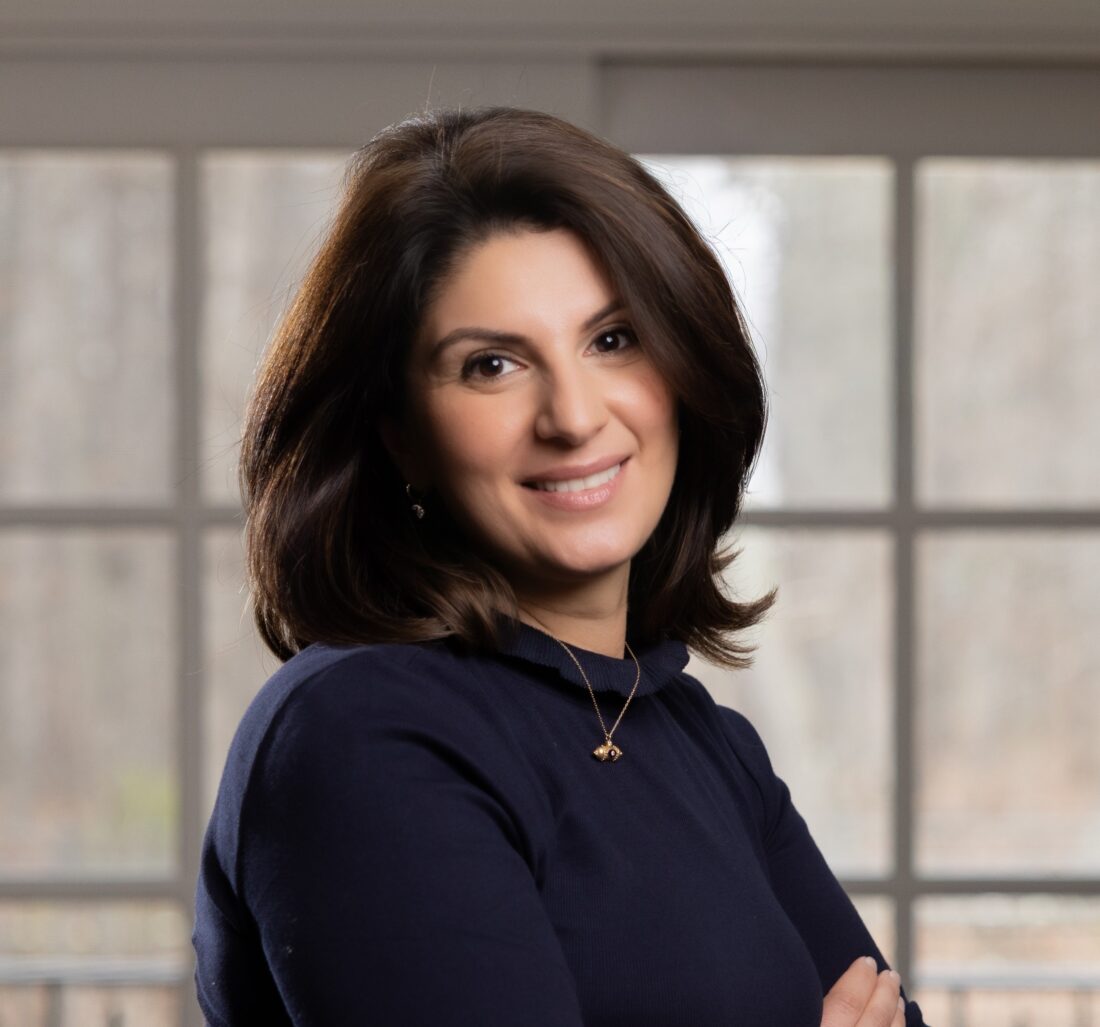
Nadia Hashimi
Nadia Hashimi is a pediatrician turned internationally bestselling author. Her 8 novels for adults and children are inspired by the people and history of Afghanistan and are read around the world in translations. Her writings on Afghan women and the fall of Afghanistan have also been featured in Ms Magazine, NPR, and Mother Jones. During Operation Allies Welcome, she consulted for the US Committee for Refugees and Immigrants to help design and implement a psychosocial support program for Afghan evacuees. She serves on the boards of Sahar Education for Girls, Aschiana Foundation, as an advisory board member to the Afghan-American Foundation, and is a member of the US Afghan Women’s Council and Welcome.US. Originally from New York, she lives with her husband and four children in Potomac, Maryland.
Very interesting read on the book and the interview. I admire not only the books, but the courage Nadia shows in her writings, the purpose and passion for the cause of women and children in Afghanistan. More power to her and you, dear Shikha for bringing to light the plight of the region.
Thank you so much for reading, Nandi 🙂
As always your interviews are so interesting n so informative looking forward to this new book of hers n another facet of afghan women.. kudos to your work for afghan women… best wishes ❤️
Thank you so much for reading, Gugdi. 🙂
Shikha! An interesting interview. Proud of you Shikha the way you are following the state of Afghan women who battle for their free existence. It must give them strength to carry on their struggle.
Your favourite author voices the grief of her sisters from her country which is creating an amazing awareness of their suffering and hopefully one day they should see the light of brighter days.
I am just going to buy Hashimi’s book.
Thank you so much for reading, Massi 🙂
What an engaging and enlightening journey this conversation swept me on! Thank you both for sharing your inimitable and inspirational insights delivered with such passion, courage and charm. You two clearly have a deep bond and I look forward to following your future conversations with each other and the world. Thank you. ❤️
Dear Sadie,
Thank you so much for listening and reading. I’m so very grateful I get to talk to not only one of my favourite authors but someone whose work made a big difference in my life. I’m glad you enjoyed our conversation 🙂
Such a gripping conversation! I cannot wait to read “City of Widows”, and contemplate about those “peaks and valleys” Nadia mentions. Also very intrigued by the future new direction! Thanks for sharing.
Thank you so much for reading and listening, Maria. We’re very intrigued by the future new direction as well 🙂
It was a very well done interview. The questions were designed and executed in a relaxed setting. Gave a lot of insights into what to expect from the book. Also a peek into what is coming next from her pen was interesting.
Thank you so much for reading and listening, Shipra. Glad you enjoyed the interview.
Very interesting interview. My first exposure to Nadia!
Thank you so much for reading and watching, dear Farah 🙂