Let’s start with something honest.
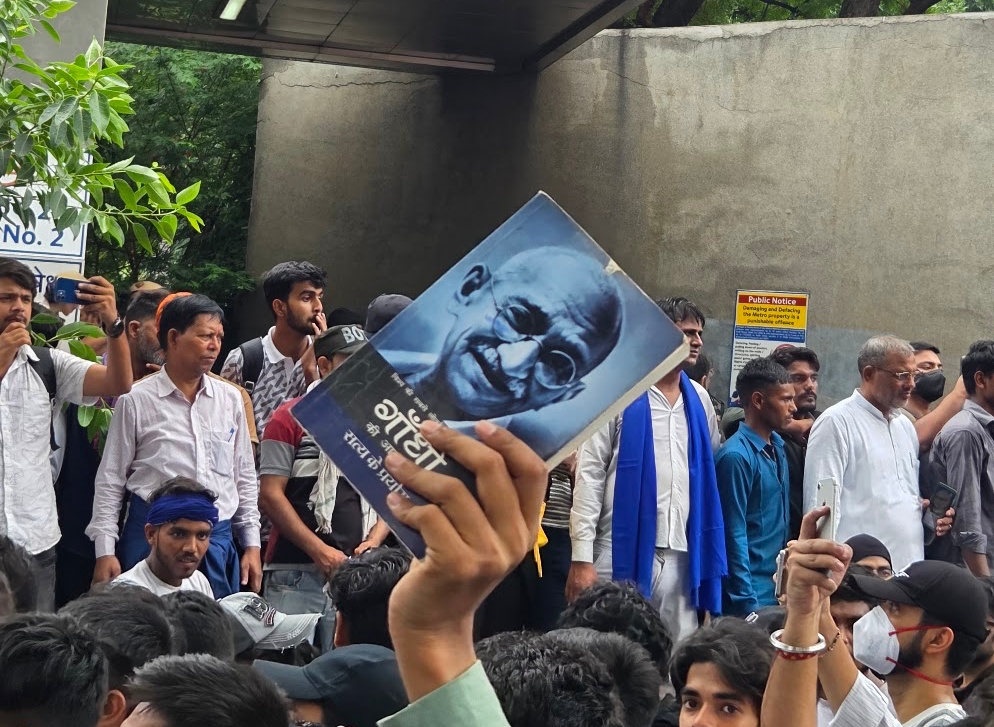
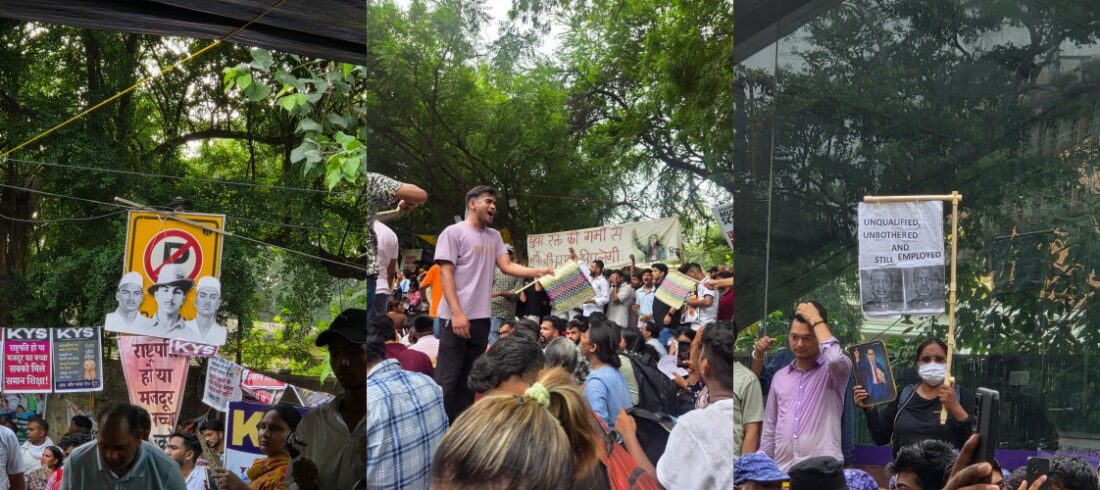
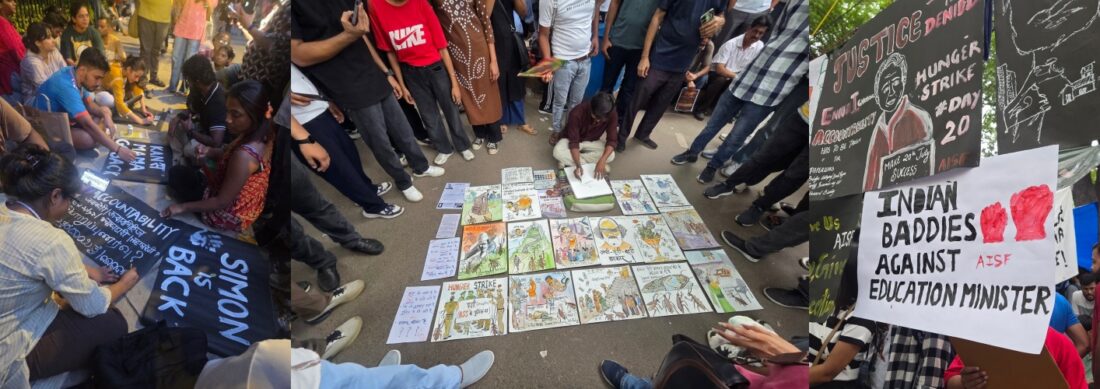
If you were at Jantar Mantar this week, or you watched the footage from your bedroom and felt something heavy in your chest — you probably also noticed that the people around you responded very differently to the exact same thing.
While some people were on the streets within hours, some wanted to be there, but couldn’t. Some people watched everything unfold through a six-inch screen, feeling a mix of guilt, rage, and helplessness that they still haven’t quite named. Some questioned the whole thing, and some people, maybe including you, felt all of those things at once.
So, this is what we usually do with it: we judge it. We judge others for not showing up. We judge ourselves for not doing more. We explain it away through politics, or values, or courage, or the lack of it.
I think that we’re skipping something more fundamental — and it happens way before any of this.
The gap between feeling and doing
The stage I think a lot of us are in right now is not apathy. Apathy is when you don’t feel anything. This is the opposite — you feel everything. You’re scrolling through images at 2 AM. You’re reading threads about what happened on the 20th. You care deeply — and you just can’t figure out what to do with it.
Let’s call it: the feeling → action gap
The thing about this gap is that it tends to get filled with shame. From the outside, people say if you cared, you’d be out there. From the inside, you say it to yourself. And neither version is particularly useful, because neither one is accurate about what’s actually happening. What is happening is older than politics — it’s biological.
Your body decided before your brain did
Here’s a thought experiment.
You’re walking through a forest. A cheetah steps out. Your brain now has roughly three seconds to figure out what to do. It doesn’t consult your political beliefs. It doesn’t check what everyone else is doing. It doesn’t open Instagram.
It asks one question: how do I survive this?
It answers with one of four responses.
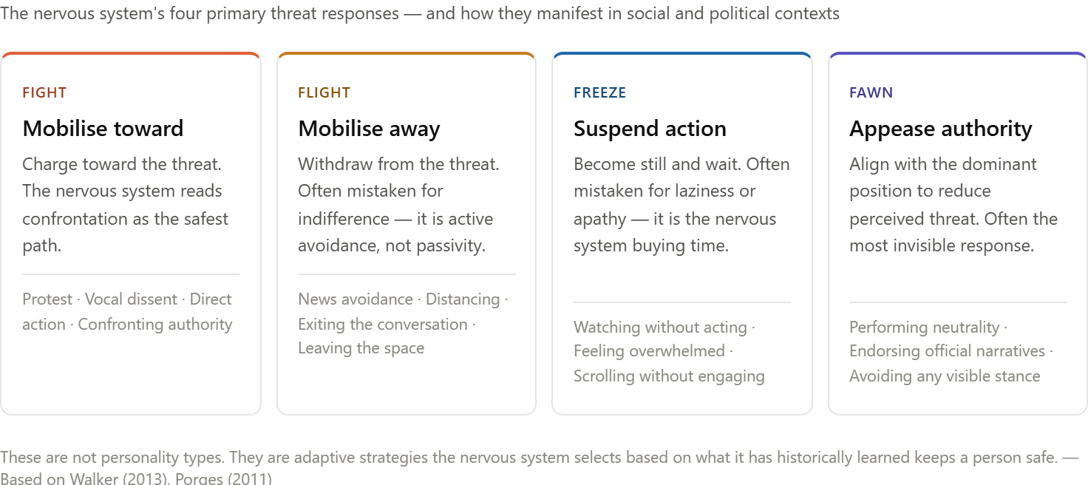
Fight. You grab something nearby and go at it. Questionable strategy. Excellent commitment.
Flight. Your running shoes become the most important thing in your life. Immediately.
Freeze. Maybe if you stay very, very still, the cheetah will decide you’re not interesting. You become a feature of the landscape and hope for the best.
Fawn. “Excuse me, Mr. Cheetah — has anyone told you your spots are actually incredible?”
Ridiculous? Sure. But this is genuinely how our nervous systems work when they sense danger.
And the crucial part — the part that changes how you read everything else in this piece — is this:
You don’t choose your threat response consciously. Your nervous system chose it for you, long before this moment, based on everything it has learned about what keeps you safe.
So when you see a protest happening and you feel yourself go still, or pull away, or want to scroll past it — it’s not a character flaw. It’s a survival pattern. One that your body has been quietly building your entire life. It’s the reason why the same cheetah gets four completely different reactions from four different people.
Why the same thing hits everyone differently
If threat responses were just about how scary something is, people in similar situations would respond similarly. They don’t. Not even close.
What actually shapes it
There are four clusters of factors — two that come from inside you, two that come from the world around you. And each one has been quietly shaping what your nervous system thinks is safe.
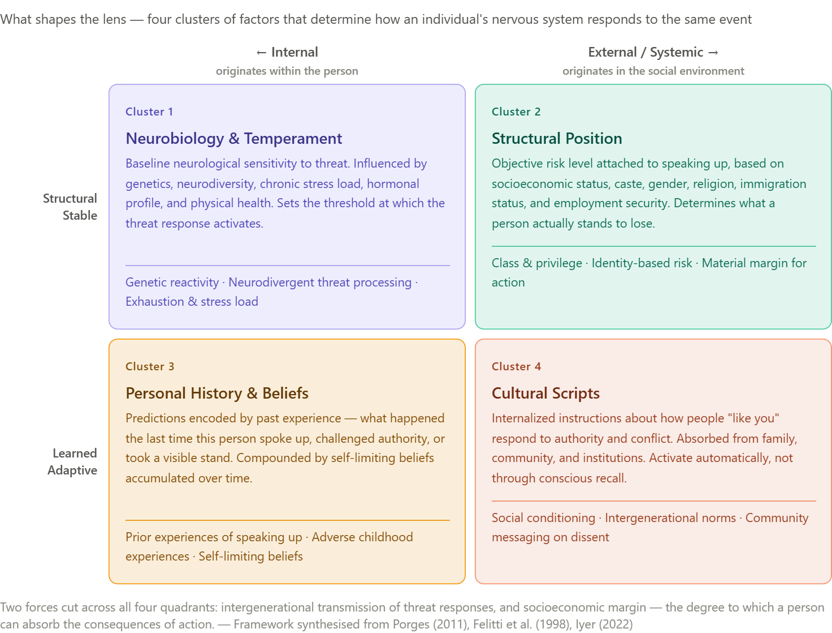
Cluster 1: How your nervous system is wired (internal, relatively stable)
Some nervous systems are just more sensitive to threat than others. Part of that is genetic. Part of it is neurodiversity. Part of it is how much stress you’re already carrying — because a body that’s already running on empty has a much lower threshold before it hits the panic button.
This isn’t weakness. It’s physiology.
Cluster 2: What you actually stand to lose (external, relatively stable)
Not everyone is taking the same risk when they show up — or don’t.
A student on scholarship who can’t afford to get detained. A woman calculating safety in a crowd at night. Someone from a minority community who has real, documented reasons to expect worse consequences than their peers. A young person whose parents have been calling them every hour, terrified.
What looks like hesitation from the outside might be a very clear-eyed calculation about what’s actually at stake. Risk isn’t equal. It was never equal.
Cluster 3: What your past has taught you (internal, shaped by experience)
Your nervous system runs on predictions. Every time you took a visible stand in the past — every time you raised your hand, spoke up in class, pushed back on something you disagreed with — your brain logged what happened next.
If it went okay, it filed a note: speaking up is survivable. If it didn’t — if you were punished, ignored, humiliated, or hurt — it filed a different note: don’t do that again. You’re not just responding to what’s in front of you now. You’re responding through every version of this that came before it.
The beliefs that come out of that — I’m not the right person, nothing I do will matter, I’ll just make it worse — aren’t accurate assessments of reality. They’re artifacts of old learning.
Cluster 4: What you’ve been told your whole life (external, shaped by culture)
Long before you ever encountered a political crisis, you were already being trained in how people like you are supposed to respond to authority, conflict, and collective action.
Respect your elders. Don’t rock the boat. Keep your head down. Be grateful. These aren’t just platitudes. For a lot of people, they were survival instructions — reinforced early and often enough to become automatic. They don’t activate through conscious thought. They activate through the same system that responds to the cheetah.
There are two things that cut across all four of these. The first is, how much your family’s response to threat was shaped by their own history (which gets passed down in ways we’re only starting to understand). And the second is, how much margin you have — financially, socially, practically — to absorb the consequences of acting. That margin is not evenly distributed. It never has been.
One thing this doesn’t mean
Understanding all of this isn’t the same as saying every response is equally fine.
It doesn’t erase the fact that some people have far more room to act than they use. It doesn’t dissolve the very real moral weight of choosing silence when you have the safety to speak. And it definitely doesn’t dilute what it means when someone shows up at enormous personal cost — because some people in these streets this week had everything to lose, and they showed up anyway. That matters. That deserves to be said clearly.
What this framework does is ask you to make a distinction between someone who won’t act and someone who genuinely, in this moment, can’t access action — because their nervous system has learned, through years of specific experiences, that acting is not safe for someone like them.
Those are different situations. Treating them identically leads to shame-based messaging that drives people further away from participation, not toward it.
Maybe we’re asking the wrong first question
When someone shows up, we ask: what made them so brave?
When someone doesn’t, we ask: why didn’t they do anything?
These questions aren’t useless. But they might not be the right starting point — especially if you’re trying to understand yourself, or the people around you, or how social movements actually grow beyond the people who were already going to show up anyway.
The more precise question — the one that actually opens something up — is this:
What has this person’s nervous system learned about what happens when they speak up
The distance between feeling and acting, in most cases, isn’t a values problem. It’s a safety problem. It’s a prediction — made mostly outside of awareness — about what happens to people like this person when they do the thing they want to do.
And predictions can be updated. That’s where this series goes next.
Part 2 is about what comes after you figure out where you are. Because if there’s no single way to experience a crisis, there’s also no single way to contribute to changing it. We’ll look at the different roles people play in social change — and why the most durable movements are built on all of them, not just the most visible ones.
If you want to go deeper
• Bessel van der Kolk — The Body Keeps the Score
• Stephen Porges — The Polyvagal Theory
• Pete Walker — Complex PTSD: From Surviving to Thriving
• Deepa Iyer — Social Change Now
• Felitti et al. (1998) — The ACE Study (the original research on how childhood experiences shape adult threat responses).

Garima Goel
Garima Goel is a Program Lead at Aikyam Foundation, where she works on strengthening India’s mental health ecosystem through systems change, public partnerships, and state-led initiatives. Previously, she worked across public policy offices, philanthropy, and social impact consulting, including co-founding an award-winning sanitation enterprise. Across her career, she has worked on various sectors including healthcare, education, AI, sustainability and WASH. She writes about the intersection of psychology, society, and the quiet ways we become more human.
Good one 👍🏻