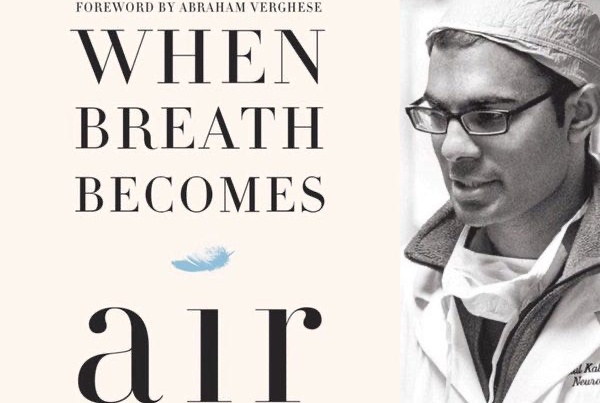
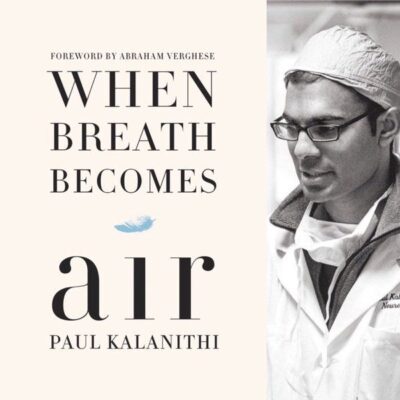
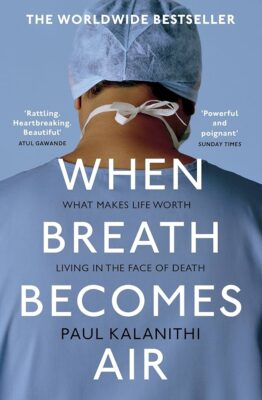
Diagnosed with an inoperable lung cancer, Paul Kalanithi knew that his time was up. The brilliant American neurosurgeon was on the cusp of fame, but there was little time to relish it. His parting gift, “When Breath Becomes Air” is a chronicle of his illustrious life, and the tenacity he showed in facing the final blow. The deeply touching memoir is critically acclaimed for its elegant prose and his poignant reflections on life.
“When Breath Becomes Air” was published posthumously in 2016. The book explores existential and relational questions, such as the meaning of life, death, loneliness, empathy, and human connections. Prior to its writing, Paul’s essays – “How Long Have I Got Left” for The New York Times and “Before I Go” for Stanford Medicine – encapsulate his insights on the question of mortality and how his perception of time underwent a gradual change with the progress of his illness.
Born in New York, Paul Kalanithi graduated in literature and human biology before he decided to pursue medicine. When he was very young, he wanted to be a writer as he believed that “literature was a powerful reflecting tool for thinking about life.” With time, he realised that medicine was probably a better tool to understand the complexities of life.
His book begins with a quote from Eliot’s “Whispers of Immortality” –
“Webster was much possessed by death
And saw the skull beneath the skin;
And breastless creatures under ground
Leaned backward with a lipless grin.”
The quote is followed by ominous opening lines that hint at approaching death. Paul Kalanithi was admitted to the same hospital where he had explained terminal illnesses and complex procedures to his patients. Now, he was looking at his own scans as a patient. With his lungs matted with innumerable tumors, spine deformed, and a full lobe of the liver obliterated – death was a foregone conclusion.
His fascination for books made him look at the world through the lens provided by intellectually stimulating books. Paul’s entry into neuroscience was, in fact, through literature. A rather non-descript novel, “Satan: His Psychotherapy and Cure by the Unfortunate Dr. Kassler”, J.S.P.S. set him thinking about the mind – brain connection.
He felt that though humans had free will, they were also biological organisms. The brain is primarily an organ, subject to the laws of physics. Literature provides a rich account of human meaning, but the machinery that somehow makes it possible is the human brain.
Paul Kalanithi’s choice of neurosurgery was not random. He chose it because it “seemed to present the most challenging and direct confrontation with meaning, identity, and death.” Neurosurgery was special because “while all doctors treat diseases, neurosurgeons work in the crucible of identity.” While literature was valuable as it put a spotlight on the life of the mind, neuroscience was no less significant as it laid down the most elegant rules of the brain.
He read extensively. T. S. Eliot’s “The Waste Land” resonated profoundly with him because it dealt with the questions of meaninglessness, isolation and the desperate quest for human connection. Eliot’s impact was not skin deep as the same metaphors leaked into his own language. The restless search for answers to various questions continue unabated throughout the book. In the same vein, he asks: “If the unexamined life was not worth living, was the unlived life worth examining?” Despite death lurking behind the rib cage, Paul didn’t let it cloud his mind.
His book inspires us to live with passion and joy, as long as breath is still breath. The questions that Paul Kalanithi grappled with during his formative years became more urgent as death looked certain. “Death”, he says, “may be a one-time event, but living with terminal illness is a process.” When one is struck by a life-threatening disease, the fear of death haunts relentlessly. One begins to wonder why we cling to life so desperately.
What makes life meaningful that we go on living? A question like this has no straightforward answer. Each one of us must find our own answers. Life seems to have no inherent meaning or purpose – it’s our intent and actions that give it shape and meaning. It is a beautiful gift that’s sacred and deserves utmost respect. Each breath we take is precious and should not be taken for granted. In moments of frustration, we treat life dismissively, but the moment we realise it is slipping away, our perspective undergoes a change. Almost instantaneously, life becomes priceless.
“When Breath Becomes Air” is a captivating book that traces the course of Paul’s life culminating in his death. More importantly, it is a beautiful meditation on life. It is not simply a tragic tale of a rising star hurtling towards a painful death, but a compelling narrative that nourishes our soul. It sensitises us to human suffering and offers insightful observations on some fundamental questions.
Life is often viewed as ephemeral, unpredictable and painful, yet some lives shine so brightly that they leave behind a trail that continues to glow long after the source is extinguished. “When Breath Becomes Air” is a deeply touching story of one such life.
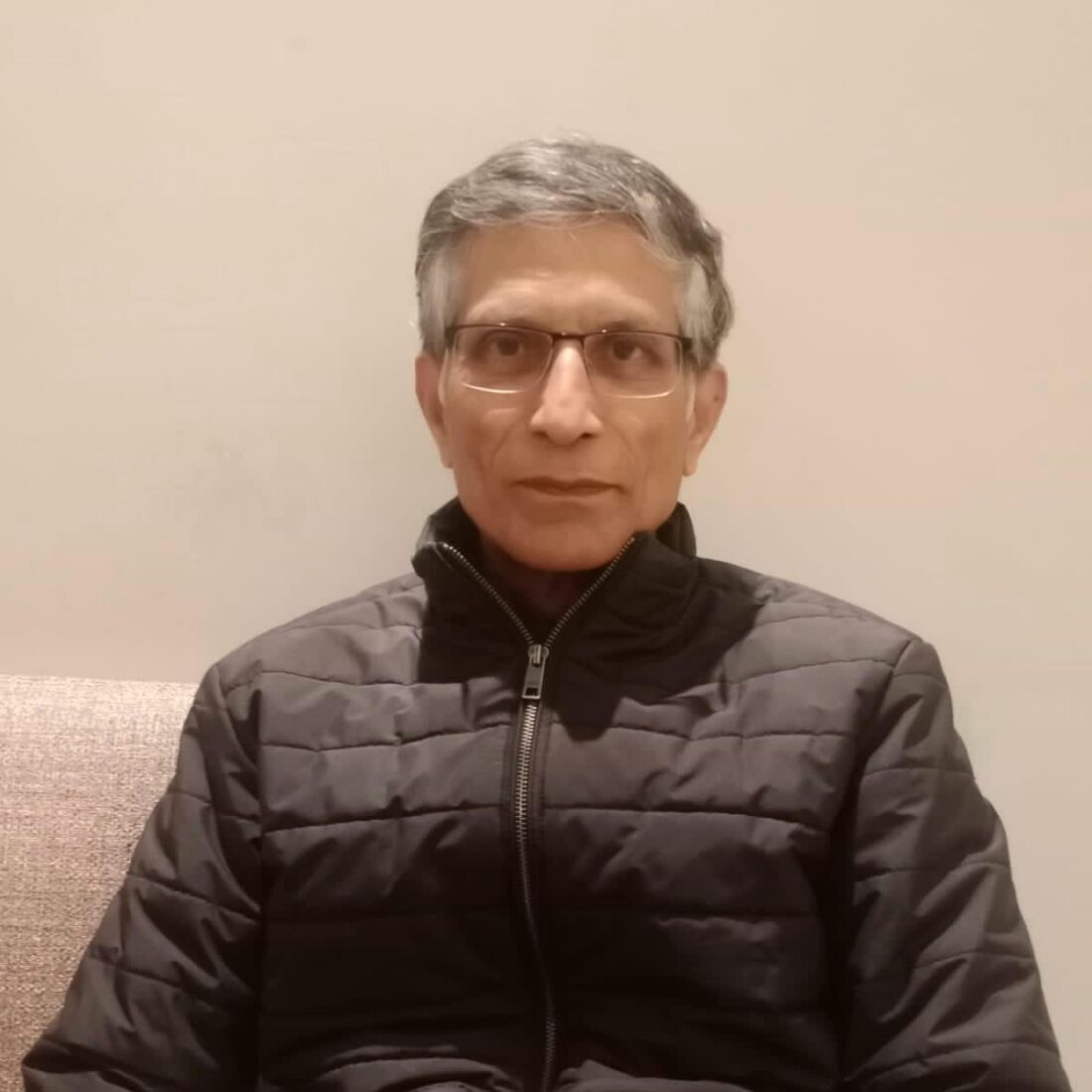
Praveen Kumar
Praveen Kumar taught English language and literature in Himachal Pradesh for close to 30 years, and retired as Principal of Govt. College, Sarahan. The co-editor of two anthologies, ‘The Threshold’ ‘and ‘Let Us Tell a Story’, he writes poetry, both in Hindi and English, short pieces on literature and topics of general interest. Presently, the coordinator of English Teachers’ Forum, Himachal Pradesh, he also runs a podcast named The Joy of Ideas.
The title of the book beautifully captures the delicate transition from living to dying. Looking forward to read this book.